Compression Bags vs. Packing Cubes: Which Should You Use?
Two products dominate the packing organization conversation, and travelers often confuse them, conflate them, or assume they serve identical purposes. Compression bags and packing cubes both organize your luggage – but they solve different problems through different methods with different trade-offs. Choosing between them (or combining them) requires understanding what each actually does, where each excels, and which matches your specific travel needs.

This detailed comparison examines both products honestly, explains when each outperforms the other, and helps you determine whether compression bags, packing cubes, or a strategic combination belongs in your luggage.
What Each Product Actually Is
Clear definitions prevent the confusion that leads to wrong purchases.
Packing Cubes Defined
Packing cubes are lightweight fabric containers with zipper closures designed to organize clothing by category inside your luggage.
Construction: Mesh or nylon panels, single zipper closure, rectangular shapes in multiple sizes.
Primary purpose: Organization – separating clothing categories into contained, accessible units.
How they work: You place clothing items inside the cube, zip it closed, and place the cube in your suitcase. Each cube holds a category (tops, bottoms, underwear, etc.).
What they don’t do: Standard packing cubes don’t compress contents. They hold and organize; they don’t reduce volume.
Compression Bags Defined
Compression bags are sealed containers that remove air from packed clothing to reduce volume.
Construction: Typically plastic or heavy-duty nylon with airtight seals and one-way air valves or roll-down compression mechanisms.
Primary purpose: Volume reduction – making packed items occupy less space.
How they work: You place clothing inside, seal the bag, then remove air through rolling, pressing, or using a valve. The bag compresses around the clothing, reducing the space it occupies.
What they don’t do: Compression bags don’t organize as effectively as cubes. They reduce volume but don’t create the same categorical accessibility.
The Hybrid: Compression Packing Cubes
A third category combines both concepts:
Construction: Packing cube design with an additional compression zipper that squeezes contents after packing.
Purpose: Organization AND volume reduction in one product.
Trade-offs: Heavier than standard cubes, more expensive, and the compression may not match dedicated compression bags.
How Each Performs: Head-to-Head Comparison
Direct comparison across key criteria reveals clear strengths and weaknesses.
Space Savings
Compression bags: Superior space savings. Removing air from clothing can reduce volume by 50-80%, depending on materials. Bulky items like sweaters, jackets, and fleece compress dramatically.
Packing cubes: Minimal space savings. Standard cubes organize contents but don’t meaningfully reduce volume. Items occupy roughly the same space inside or outside the cube.
Compression packing cubes: Moderate space savings. The compression zipper reduces volume by 30-60% – less than dedicated compression bags but significantly more than standard cubes.
Winner for space: Compression bags, followed by compression cubes, then standard cubes.
Organization
Packing cubes: Superior organization. Multiple cubes create clear categories. Mesh panels allow visibility. Opening one cube doesn’t disturb others. The system scales from weekend trips to extended travel.
Compression bags: Inferior organization. Compressed bags create dense blocks that don’t categorize intuitively. You often can’t see contents through compressed plastic. Accessing one item may require decompressing the entire bag.
Compression packing cubes: Good organization with compression benefit. Categories remain distinct while contents are compressed. Visibility through mesh panels is maintained.
Winner for organization: Standard packing cubes, followed by compression cubes, then compression bags.
Accessibility
Packing cubes: Excellent accessibility. Unzip the cube you need, find your item, rezip. Other cubes remain undisturbed. The system maintains organization throughout your trip.
Compression bags: Poor accessibility. Opening a compression bag releases the compression. Finding one item means decompressing, searching, removing, then recompressing. Every access disrupts the volume savings.
Compression packing cubes: Good accessibility. Opening the organizational zipper accesses contents without full decompression. The compression zipper can be reopened and reclosed, though recompression requires effort.
Winner for accessibility: Standard packing cubes, significantly ahead of both alternatives.
Weight
Packing cubes: Lightweight. A typical set of four to six cubes weighs 6-12 ounces total. Mesh panels and thin nylon keep weight minimal.
Compression bags: Varies widely. Plastic compression bags are very light (2-4 ounces each). Heavy-duty nylon compression bags with valves can be heavier (4-8 ounces each).
Compression packing cubes: Moderate weight. The dual-zipper construction and sturdier fabric typically make these heavier than standard cubes – 10-18 ounces for a set.
Winner for weight: Plastic compression bags (lightest), followed by standard packing cubes, then compression cubes.
Durability
Packing cubes: Good durability. Quality cubes last years with regular use. Zippers are the primary failure point – quality brands use YKK or similar premium zippers.
Compression bags: Varies. Plastic bags puncture, develop leaks, and lose compression ability over time. They’re essentially disposable after multiple uses. Heavy-duty nylon bags last longer but still face seal degradation.
Compression packing cubes: Good durability. Built sturdier than standard cubes to handle compression forces. Quality brands last for years.
Winner for durability: Compression packing cubes and standard packing cubes tied, with compression bags significantly behind.
Wrinkle Impact
Packing cubes: Minimal wrinkle impact. Items sit in cubes without excessive compression, maintaining reasonable wrinkle levels similar to standard packing.
Compression bags: Significant wrinkle potential. Compressing air out of clothing forces fabric against itself under pressure. Items removed from compression bags often show compression wrinkles that require steaming or ironing.
Compression packing cubes: Moderate wrinkle impact. Less extreme than full compression bags but more wrinkling than standard cubes due to the compression element.
Winner for wrinkle prevention: Standard packing cubes, followed by compression cubes, then compression bags.
Cost
Packing cubes: Budget to mid-range. Basic sets start around $15-25. Quality sets run $30-50. Premium options reach $50-80.
Compression bags: Budget friendly. Plastic compression bags cost $10-20 for multi-packs. Heavy-duty options cost $15-30 each.
Compression packing cubes: Premium pricing. Quality sets typically cost $40-80. The combined functionality commands higher prices.
Winner for cost: Compression bags (cheapest), followed by standard cubes, then compression cubes.
When Compression Bags Win
Specific scenarios favor compression bags over packing cubes.
Bulky Cold-Weather Clothing
Sweaters, fleece jackets, down layers, and heavy winter clothing compress dramatically in compression bags. A puffy jacket that fills half a suitcase can compress to a fraction of that space.
Why bags win here: The volume reduction is transformational for bulky items. Packing cubes contain these items but don’t reduce their considerable volume. When packing heavy clothing, compression bags are the only option that meaningfully addresses the space problem.
One-Way Packing (Outbound Heavy)
When you’re traveling to buy things – shopping trips, visiting family who loads you with gifts, or relocating with belongings – compression bags help maximize outbound capacity.
Why bags win here: You need maximum space on the return trip. Compressing outbound clothing creates room for additions. Once you’ve unpacked at your destination, the bags can compress souvenirs or purchases for the return.
Emergency Space Creation
When you’ve already packed and realize you need more room, compression bags can create space that doesn’t otherwise exist.
Why bags win here: They solve the immediate problem of insufficient space. Throwing items into compression bags and squeezing out air creates room quickly.
Seasonal Storage Between Trips
Compression bags serve double duty for storing off-season clothing or travel gear between trips.
Why bags win here: Long-term compression reduces storage volume at home, not just in luggage.
Dirty Laundry Containment
Compression bags seal odors inside, making them excellent for containing worn clothing.
Why bags win here: The airtight seal that enables compression also prevents odor transfer to clean items. Packing cubes don’t contain odors effectively.
When Packing Cubes Win
More scenarios favor packing cubes over compression bags.
Multi-Day Trip Organization
When you need to access different clothing throughout a trip, cubes maintain organization that compression bags destroy with each access.
Why cubes win here: The accessibility advantage is decisive. Opening and closing cubes repeatedly doesn’t degrade their organizational benefit. Compression bags lose their value every time you open them.
Frequent Packing and Unpacking
Multi-destination trips requiring repeated packing and unpacking strongly favor cubes.
Why cubes win here: Cubes transfer from suitcase to drawer to suitcase efficiently. Compression bags require recompression at every stop – a time-consuming process that becomes tedious across multiple destinations.
Dress Clothes and Wrinkle-Prone Items
When appearance matters, cubes protect clothing better than compression bags.
Why cubes win here: No compression means no compression wrinkles. Items stored in standard cubes emerge in similar condition to how they entered. Compression bags virtually guarantee wrinkles on delicate or wrinkle-prone fabrics.
Family Travel Organization
Managing multiple people’s clothing requires categorical organization.
Why cubes win here: Color-coded cubes for each family member create instant identification and access. Compression bags don’t offer the same visual or organizational distinction.
Carry-On Organization
When everything must be accessible during travel (plane carry-ons), cubes provide order that bags don’t.
Why cubes win here: Cubes keep your carry-on organized for security inspection and in-flight access. Compression bags create dense blocks that don’t work well for items you need during travel.
Ongoing Trip Management
For the general maintenance of a well-organized suitcase throughout a trip, cubes are superior.
Why cubes win here: The cube system maintains itself. Pull a cube, use an item, return the item, replace the cube. The system works the same on day one and day fourteen.
The Strategic Combination Approach
Many experienced travelers use both products strategically.
How to Combine Effectively
Compression bags for:
- Bulky items that need volume reduction (sweaters, jackets, heavy layers)
- Dirty laundry containment
- Items you won’t access until trip end
- Emergency space creation
Packing cubes for:
- Daily-access clothing organized by category
- Wrinkle-prone or dress items
- Items you need throughout the trip
- Family member separation
Example Combined Packing
In compression bags:
- Puffy jacket (compressed flat)
- Sweater and fleece (compressed together)
- Dirty laundry bag (airtight seal)
In packing cubes:
- Tops cube (medium, daily access)
- Bottoms cube (medium, daily access)
- Underwear and socks cube (small, daily access)
- Dress items cube (standard, wrinkle-sensitive)
Result: Maximum organization for daily items AND maximum compression for bulky items. Each product handling what it does best.
What About Compression Packing Cubes?
Compression cubes work well as a middle-ground solution:
Best for travelers who:
- Want some compression without dedicated bags
- Prefer one product type rather than managing two
- Travel primarily carry-on and need moderate space savings
- Don’t pack extremely bulky items requiring maximum compression
Less ideal for travelers who:
- Need maximum compression (dedicated bags compress more)
- Prioritize minimal wrinkles (standard cubes compress less)
- Watch weight carefully (compression cubes are heaviest)
Making Your Decision
Choose Compression Bags If
- Your primary problem is insufficient space
- You pack bulky clothing regularly
- You don’t need frequent access to compressed items
- Wrinkles are acceptable or you have recovery methods
- Budget is a primary concern
Choose Packing Cubes If
- Your primary need is organization
- You access clothing frequently throughout trips
- You pack and unpack at multiple destinations
- Wrinkle prevention matters
- You want a system that maintains itself throughout trips
Choose Compression Packing Cubes If
- You want both organization and moderate compression
- You prefer one product type for simplicity
- You travel carry-on and need space optimization
- You’re willing to pay premium for combined functionality
Choose Both If
- You travel in varied conditions requiring different clothing types
- You pack both bulky and delicate items
- You want maximum optimization for each category
- You’ve tried one and found it insufficient alone
Real-Life Selection Experiences
Jennifer started with compression bags because space was her biggest concern. She saved enormous volume but found the constant recompression tedious on multi-city trips. She switched to packing cubes for daily items and kept compression bags only for her heavy jacket.
Marcus bought compression packing cubes as a compromise and found them perfect for his carry-on-only business travel. The moderate compression gives him enough space savings while maintaining the organization his frequent hotel transitions require.
The Thompson family uses packing cubes exclusively – each family member has color-coded cubes. The kids pack their own cubes, parents verify contents, and suitcase organization is maintained across their two-week vacations.
Sarah tried both independently before discovering the combination approach. Compression bags handle her cold-weather layers while packing cubes organize her daily wardrobe. The system has worked for three years across dozens of trips.
Tom bought cheap plastic compression bags and experienced exactly the durability problems predicted – leaking seals, punctured bags, and lost compression by trip three. He switched to quality compression packing cubes and hasn’t looked back.
20 Powerful and Uplifting Quotes About Packing Organization
- “Compression bags and packing cubes solve different problems – understanding which problem you have determines which product you need.”
- “Space savings and organization are different goals that sometimes require different tools.”
- “Compression bags win on volume reduction; packing cubes win on accessibility. Know your priority.”
- “The strategic combination of both products gives experienced travelers the best of both approaches.”
- “Bulky items deserve compression; daily-access items deserve organization. Match the tool to the task.”
- “Compression packing cubes offer a middle ground – not the best at either function but competent at both.”
- “Accessibility matters more than compression for most trip types – you access your clothes every day.”
- “The wrinkle trade-off of compression bags is real – space savings come at the cost of garment appearance.”
- “Family travelers almost always benefit more from organizational cubes than from compression bags.”
- “Carry-on-only travelers may need compression; checked-bag travelers usually need organization more.”
- “The cheapest compression bags are essentially disposable – factor replacement cost into budget calculations.”
- “Dirty laundry containment is compression bags’ hidden superpower – airtight seals contain what cubes cannot.”
- “Multi-destination trips strongly favor packing cubes because recompression at every stop becomes exhausting.”
- “The best packing system is the one you’ll actually use consistently – complexity defeats purpose.”
- “Test your preferred method on a short trip before committing for major travel.”
- “Quality matters more than type – excellent packing cubes outperform cheap compression bags every time.”
- “Compression makes sense for storage items; organization makes sense for access items. Most clothing is access items.”
- “Your travel style determines your product choice more than any reviewer’s recommendation.”
- “The combination approach isn’t compromise – it’s optimization. Each product handles its strength.”
- “Start with packing cubes if you’re unsure – organization benefits more travelers than compression does.”
Picture This
Imagine yourself preparing for a two-week trip that includes three days in a cold mountain destination, four days at a beach resort, and a week in European cities. The clothing variety is enormous – heavy layers, swimwear, casual clothes, and a few nice outfits for dinners out.
You lay everything out on your bed and face the reality: this won’t fit in your suitcase using either compression bags or packing cubes alone.
So you deploy both strategically.
First, the compression bags. Your puffy jacket goes into a large compression bag. You roll the bag, pressing air out through the one-way valve. The jacket that occupied half your suitcase flattens to a two-inch thick rectangle. Your heavy fleece joins it in a second bag – another dramatic volume reduction. A third compression bag takes your thickest sweater.
These three bags, compressed, now occupy the space that one uncompressed jacket did. The cold-weather problem is solved.
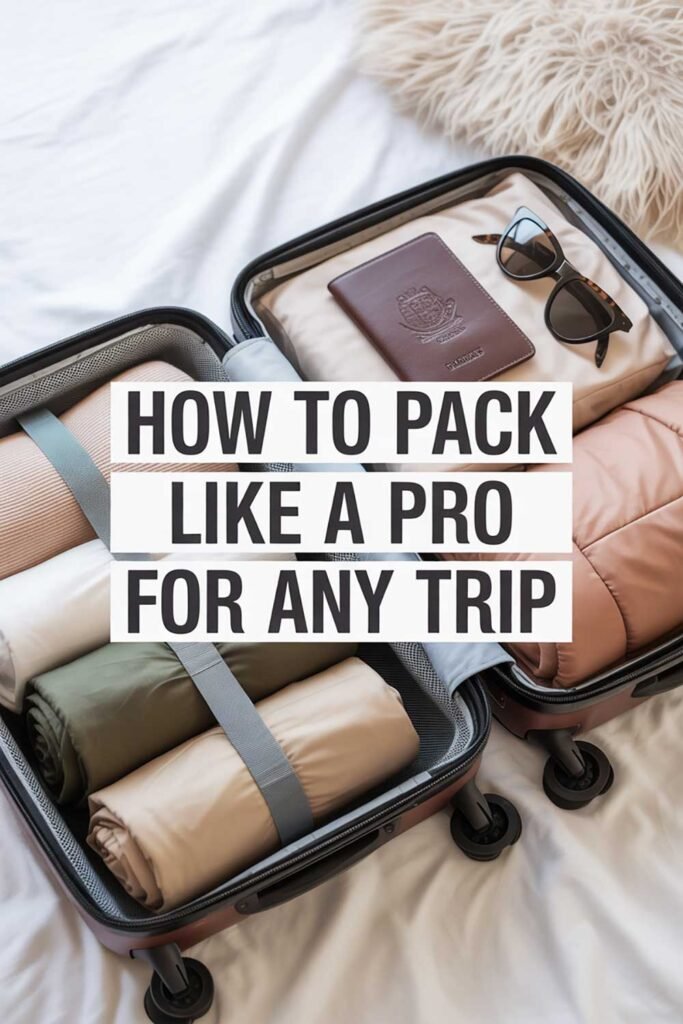
Next, the packing cubes. Your daily-wear tops go into a medium cube – eight shirts rolled neatly, visible through the mesh panel. Your bottoms fill another medium cube – shorts, pants, and a skirt organized and accessible. A small cube holds underwear and socks for two weeks. Another small cube takes your swimwear and beach accessories.
Your two dinner outfits – a dress and a blazer with nice pants – go into a standard packing cube with tissue paper interleaving. No compression for these; wrinkle prevention matters more than space savings.
You place everything in your suitcase. Compressed bags at the bottom – they’re dense, flat, and form a stable foundation. Packing cubes stack on top, organized by access frequency. The dinner outfit cube goes on top of everything, protected from compression.
Shoes in their bag along one side. Toiletries in their case. Electronics in your personal item. Everything has a place.
At the mountain destination, you pull the compression bags and access your heavy layers. They’re wrinkled from compression, but heavy fleece and puffy jackets don’t show wrinkles meaningfully. Your daily cubes stay in the suitcase, organized and undisturbed.
At the beach resort, the compression bags go back in the suitcase, recompressed with the cold-weather items you no longer need. Your swimwear cube comes out. Your daily cubes rotate through use and laundry seamlessly.
In the European cities, you access your dinner cube for nice evenings out – the tissue-interleaved items emerge looking fresh because they were never compressed. Your daily cubes continue their reliable service.
At each destination transition, repacking takes ten minutes. Compressed bags return to the bottom. Cubes stack on top. The system maintains itself.
On the return flight, your worn items are separated in a compression bag that contains both volume and odor. Clean items remain in their cubes, undisturbed and organized.
You unpack at home realizing the system worked perfectly – each product handling what it does best, neither asked to perform the other’s function. Compression bags saved space on bulky items. Packing cubes organized daily access items. Together, they solved a packing challenge that neither could have handled alone.
Share This Article
Debating between compression bags and packing cubes or know someone who packs without any organization system? Share this article with travelers trying to decide which product to buy, anyone who uses one but hasn’t considered the other, or friends who could benefit from the combination approach! Understanding each product’s strengths and weaknesses enables smarter purchases. Share it on Facebook, Instagram, Twitter, Pinterest, or send it directly to travel companions. Help spread the word that the right packing tool depends on your specific needs – and that sometimes the best answer is both. Your share might help someone finally solve their packing frustrations!
Disclaimer
This article is provided for informational and educational purposes only and is based on general observations about packing organization products and common user experiences. The information contained in this article is not intended to be product endorsement or comprehensive gear guidance.
Individual experiences with packing products vary based on travel style, luggage type, clothing materials, and specific products purchased. Results described may not apply to all users.
The author and publisher of this article are not responsible for any purchasing decisions, packing outcomes, or product satisfaction. Readers assume all responsibility for their own gear choices.
Product mentions are illustrative examples, not endorsements. Research specific products independently before purchasing.
Compression effectiveness, durability, and performance vary significantly by brand, price point, and specific product. Budget products may not perform as described for premium options.
Space savings percentages are approximate ranges based on common experiences. Actual results depend on items compressed and specific products used.
This article does not receive compensation from packing product manufacturers or retailers.
By using the information in this article, you acknowledge that you do so at your own risk and release the author and publisher from any liability related to your purchasing decisions and packing experiences.