Common First-Time Cruiser Mistakes and How to Avoid Them
Every experienced cruiser looks back on their first voyage and cringes at mistakes they made – overpacking, missing activities, wasting money on things that weren’t worth it, and failing to take advantage of included amenities. The learning curve for cruising is steeper than most vacations because ships operate on their own rules, schedules, and systems that aren’t intuitive to newcomers.

The good news: these mistakes are entirely avoidable when you know what to watch for. This guide covers the most common first-time cruiser errors, explaining not just what goes wrong but why it happens and exactly how to prevent it. Learning from others’ mistakes means your first cruise can feel like a seasoned traveler’s voyage rather than a confused newcomer’s stumble through unfamiliar territory.
Booking Mistakes
Errors made before you even board can shape your entire cruise experience.
Mistake: Choosing the Cheapest Cabin Without Research
First-timers often book the lowest-priced cabin available, not realizing that cabin location dramatically affects experience.
What goes wrong: You end up directly below the pool deck and hear furniture scraping at 6 AM. Or above the nightclub with bass thumping until 2 AM. Or so far forward that every wave produces noticeable motion. Or near the anchor machinery that clangs during port arrivals.
How to avoid it: Research your specific ship’s deck plan before booking. Use sites like Cruise Critic to read cabin reviews from passengers who’ve stayed there. Avoid cabins directly below public areas, near elevators or stairwells, or at the extreme front or back of the ship. Midship, mid-deck cabins offer the smoothest ride and least noise.
Mistake: Not Understanding What’s Included
Many first-timers either assume everything is included or assume everything costs extra – both misconceptions lead to problems.
What goes wrong: You either waste money buying things that were free all along, or you miss out on included amenities you didn’t realize existed, then overspend on extras you didn’t budget for.
How to avoid it: Before sailing, get clear on what your cruise fare includes. Typically included: cabin, main dining room meals, buffet, room service basics, entertainment shows, pools, fitness center, and kids’ clubs. Typically extra: specialty restaurants, alcoholic beverages, soda, spa treatments, casino, shore excursions, and WiFi. Know the distinction so you can budget appropriately and use included amenities fully.
Mistake: Booking Flights Too Close to Sailing
The temptation to minimize pre-cruise hotel costs leads first-timers to book flights arriving the same day as embarkation, often with tight connections.
What goes wrong: Your flight is delayed, you miss the ship, and you’re scrambling to catch up at the next port at your own expense. Ships don’t wait for late passengers, period.
How to avoid it: Arrive in your embarkation city the day before sailing. Yes, this means an extra hotel night, but it also means peace of mind and a buffer against travel disruptions. The cost of missing your cruise far exceeds the cost of one pre-cruise hotel night.
Mistake: Ignoring Cancellation and Insurance Policies
First-timers often don’t consider what happens if they can’t take their cruise.
What goes wrong: Life happens – illness, family emergency, work crisis – and you discover your cruise is non-refundable or has steep cancellation penalties you weren’t expecting.
How to avoid it: Understand your cruise line’s cancellation policy before final payment. Consider travel insurance, especially “cancel for any reason” coverage if flexibility matters. The earlier you cancel, the less you lose, so make decisions quickly if circumstances change.
Embarkation Day Mistakes
Day one sets the tone for your voyage. These errors start things poorly.
Mistake: Arriving at the Port Late
First-timers sometimes treat the boarding window as a suggestion rather than a constraint.
What goes wrong: You arrive at 3 PM for a 4 PM departure, face long lines, rushed processing, and barely make it aboard before sailing. Your first hours are stressful instead of enjoyable, and your checked luggage might not reach your cabin until late evening.
How to avoid it: Arrive early in your boarding window – ideally by noon or early afternoon. Early arrivers enjoy the ship for hours before late arrivers even board. Lines are shorter, the buffet is uncrowded, and you can explore and relax before the rush.
Mistake: Not Packing Essentials in Your Carry-On
First-timers pack everything in checked luggage, not realizing the timing gap before bags arrive.
What goes wrong: Your luggage doesn’t reach your cabin until 6 PM or later. Meanwhile, you want to swim, change clothes, take medications, or simply freshen up – and everything is in bags you don’t have.
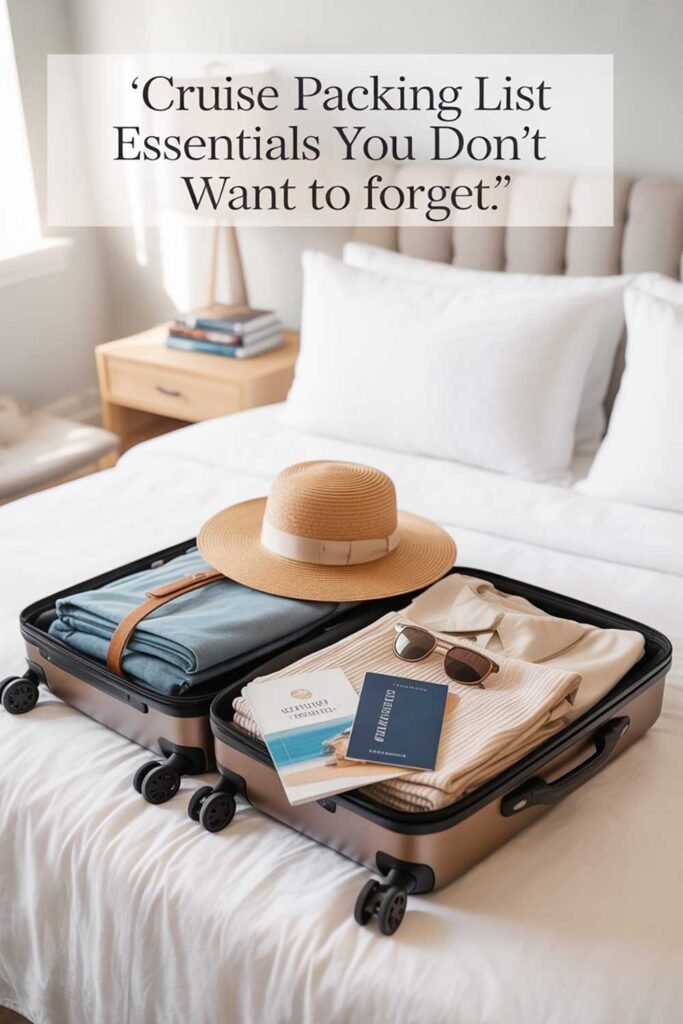
How to avoid it: Pack a carry-on bag with everything you’ll need until your luggage arrives: swimsuit, change of clothes, medications, toiletries, phone chargers, valuables, and cruise documents. Carry this bag aboard personally.
Mistake: Skipping the Muster Drill
Some first-timers view the safety drill as optional or try to hide from it.
What goes wrong: Modern cruise lines track drill completion. If you haven’t completed it, crew will find you and require completion before the ship can sail. You’ll feel embarrassed, waste time, and potentially delay the ship’s departure.
How to avoid it: Complete the muster drill promptly when it becomes available. Modern e-muster via app or stateroom TV takes minutes. Traditional muster stations involve brief attendance at your assigned location. It’s mandatory for good reason – safety training matters.
Mistake: Not Making Reservations Immediately
First-timers don’t realize that some shipboard experiences require advance booking.
What goes wrong: You decide mid-cruise that you want to try that specialty restaurant everyone’s raving about, but it’s fully booked for the remainder of your voyage. Same with popular spa appointments, specific show times, or limited-capacity activities.
How to avoid it: On embarkation day – or before via the cruise app – book specialty dining, spa treatments, shows requiring reservations, and any limited-capacity experiences. You can always cancel later, but you can’t always get in later.
Onboard Spending Mistakes
The cashless environment and vacation mindset combine to create spending problems.
Mistake: Losing Track of Onboard Spending
The cruise card creates psychological distance from spending that cash never would.
What goes wrong: You tap your card for drinks, spa treatments, specialty dinners, and shore excursions without tracking totals. On the final night, your bill shows $2,000+ in charges you didn’t realize you’d accumulated.
How to avoid it: Check your onboard account daily through your stateroom TV or cruise app. Set a daily budget before sailing and track against it. The cashless system is convenient, but it requires active monitoring to prevent overspending.
Mistake: Buying Beverage Packages Without Calculating Value
Cruise lines push beverage packages aggressively, and first-timers often buy them reflexively.
What goes wrong: You buy a $70/day unlimited alcohol package but drink three cocktails daily – spending $490 on drinks that would have cost $200 à la carte. Or you don’t drink much but felt pressured into purchasing.
How to avoid it: Calculate honestly: How many drinks will you actually have daily? At $12-15 per drink, you need 5-6 drinks daily just to break even on most packages. If you’re not a heavy drinker, skip the package. If you are, the package may provide value.
Mistake: Paying for Things That Are Free
First-timers sometimes pay for experiences available at no charge.
What goes wrong: You pay $35 for the specialty buffet brunch not realizing the main dining room serves an excellent included brunch. You buy bottled water when free water stations exist throughout the ship. You order room service with charges when basic room service is complimentary.
How to avoid it: Before paying for anything, ask whether a free alternative exists. The main dining room, buffet, and room service (basic menu) are included. Many ships have free pizza, ice cream, and snacks. Know what’s included before paying for extras.
Mistake: Over-Buying Shore Excursions Through the Ship
Ship-sponsored excursions offer convenience and guarantees but often at premium prices.
What goes wrong: You book every port excursion through the cruise line and spend $800+ on tours you could have arranged independently for half the cost.
How to avoid it: Ship excursions make sense for ports where timing is critical or logistics are complex, and for passengers who value the “ship will wait” guarantee. But for simple ports – beach breaks, walking-distance attractions, straightforward tours – independent arrangements often cost 40-60% less. Mix ship and independent excursions based on each port’s needs.
Port Day Mistakes
How you handle destinations affects a huge portion of your cruise experience.
Mistake: Trying to Do Too Much in Every Port
First-timers want to maximize every moment ashore, cramming too much into limited time.
What goes wrong: You rush through three attractions in five hours, spend more time in transit than actually experiencing anything, arrive back at the ship exhausted rather than refreshed, and remember the day as stressful rather than enjoyable.
How to avoid it: Choose one or two highlights per port rather than attempting to see everything. Quality beats quantity. You can always return to a destination you loved; you can never recover time wasted rushing between too many stops.
Mistake: Cutting Return Time Too Close
First-timers underestimate how long activities take and how serious the all-aboard time is.
What goes wrong: Your taxi is stuck in traffic, your tour runs long, or you lose track of time shopping. You arrive at the pier as the ship pulls away. Now you’re stranded, paying for emergency transportation to the next port, if you can reach it at all.
How to avoid it: Know your all-aboard time and treat it as absolute. Plan to return 45-60 minutes early, especially in unfamiliar ports with uncertain transportation. The ship will sail without you – this is not a bluff or a guideline.
Mistake: Not Bringing Ship Identification Ashore
First-timers sometimes leave their cruise card in their cabin when exploring ports.
What goes wrong: You can’t reboard without your cruise card. You waste time at guest services proving your identity and waiting for a replacement while your return window narrows.
How to avoid it: Carry your cruise card whenever you leave the ship. Also carry a ship ID card or take a photo of the ship information sheet showing the ship’s name, your sailing date, and the local ship agent contact information.
Mistake: Ignoring Free Port Activities
First-timers assume experiencing a destination requires expensive excursions.
What goes wrong: You pay $80 for a beach excursion when a free beach was walking distance from the pier. You take a $60 city tour when the port area itself was the attraction. You miss exploring on your own because you thought excursions were required.
How to avoid it: Research ports before your cruise. Many have walkable attractions, free beaches, and self-guided options that require no purchased excursion. Sometimes the best port experience is simply wandering and discovering on your own.
Dining and Activity Mistakes
How you use the ship determines how much value you extract from your fare.
Mistake: Only Eating at the Buffet
First-timers gravitate to the familiar buffet and never try other options.
What goes wrong: You miss the main dining room’s excellent multi-course meals with table service, eat repetitive buffet food, and never experience the dining that makes cruising special.
How to avoid it: Use the main dining room for dinner most nights. The food is typically superior to the buffet, the service is attentive, and the experience is a cruise highlight. Save the buffet for casual breakfast and lunch.
Mistake: Not Exploring the Ship Fully
First-timers find a comfortable spot and stick to it without discovering everything available.
What goes wrong: You spend your entire cruise at the main pool, never finding the quiet adults-only deck, the specialty coffee shop, the observation lounge with stunning views, or the library with comfortable reading chairs.
How to avoid it: Early in your cruise, walk every deck and explore every public space. Find the hidden gems, quiet corners, and alternative venues. Large ships have dozens of spaces most passengers never discover.
Mistake: Skipping Included Activities and Entertainment
First-timers sometimes ignore the daily program, missing free entertainment and activities.
What goes wrong: You relax in your cabin every evening while Broadway-quality shows perform to empty seats. You don’t know about the trivia, cooking demonstrations, enrichment lectures, and deck parties happening throughout the day.
How to avoid it: Read the daily program each evening and plan the next day. Circle activities that interest you. Attend at least one show – they’re included and often excellent. Try activities you’ve never done before.
Mistake: Not Using the Fitness Center, Spa Amenities, or Pools
Some first-timers forget these amenities exist or feel shy using them.
What goes wrong: You skip the fitness center that could have balanced all that vacation eating. You miss the spa’s thermal suite (sometimes free to use). You never try the hot tubs or pools that you paid for in your cruise fare.
How to avoid it: Use what you’re paying for. The fitness center is free and usually uncrowded. Many spas offer complimentary areas like steam rooms or relaxation lounges. The pools and hot tubs are there for you – use them.
Social and Practical Mistakes
These errors affect your overall experience and comfort.
Mistake: Overpacking
First-timers bring far more than needed, often including formal wear they never use.
What goes wrong: You struggle with heavy luggage, have no room for souvenirs, and discover you wore the same five outfits repeatedly while half your suitcase sat untouched.
How to avoid it: Pack less than you think you need. Cruise dress codes have relaxed – “formal night” rarely requires actual formal wear anymore. Bring versatile pieces that mix and match. You can always do laundry onboard.
Mistake: Not Tipping Appropriately
First-timers are confused about gratuities, sometimes removing automatic tips or not knowing who else to tip.
What goes wrong: You remove automatic gratuities to “tip in cash” but then forget or under-tip, affecting crew members’ income. Or you add excessive tips on top of automatic gratuities, overspending unnecessarily.
How to avoid it: Automatic gratuities ($14-20 per person per day at most cruise lines) are designed to properly compensate your cabin steward, dining staff, and behind-the-scenes crew. Leave them in place. Add cash tips only for truly exceptional individual service beyond the norm.
Mistake: Expecting Instant Communication
First-timers assume their phones work normally at sea.
What goes wrong: You don’t buy a WiFi package and are frustrated when you can’t check email, post to social media, or communicate with people at home. Or you use ship WiFi casually without understanding the costs.
How to avoid it: Understand that ship WiFi costs money and is slower than home internet. If staying connected matters, purchase a package before sailing when rates are often better. If you can disconnect, embrace the digital detox. But make the choice consciously.
Mistake: Comparing Everything to Land-Based Vacations
First-timers evaluate cruises against the wrong benchmarks.
What goes wrong: You complain that the pool is smaller than resort pools, that restaurants aren’t as good as city restaurants, or that port time isn’t as long as you’d like. You miss what cruising does well while focusing on what it can’t match.
How to avoid it: Evaluate cruises for what they are – floating resorts that transport you to multiple destinations with meals, entertainment, and accommodation bundled together. The value is in the combination, not any single element competing with specialized alternatives.
Real-Life First-Cruise Mistake Stories
Jennifer didn’t realize her cabin was directly below the pool deck until 6 AM the first morning when furniture scraping woke her. She barely slept for seven nights. Now she researches deck plans obsessively before booking.
The Martinez family arrived at the port at 2:30 PM for a 4 PM departure. By the time they processed through long lines, they barely made it aboard. Their luggage didn’t arrive until after dinner. They now arrive before noon.
Marcus didn’t track his onboard spending and was shocked by a $1,800 bill on the final night. He hadn’t realized how quickly drinks, casino visits, and specialty dining accumulated. Now he checks his account daily.
Sarah nearly missed the ship in Jamaica because she underestimated transportation time from her excursion location. She ran down the pier as the gangway was being raised. She now returns to the ship an hour before all-aboard time.
Tom skipped the main dining room because it seemed “too formal” and ate buffet food for seven nights. On the final evening, friends convinced him to try the dining room, and he couldn’t believe what he’d been missing all week.
20 Powerful and Uplifting Quotes About Learning From Cruise Mistakes
- “Every experienced cruiser made first-timer mistakes – the difference is learning from them or repeating them.”
- “The cost of cruise mistakes is often measured in missed experiences rather than just wasted money.”
- “First-cruise errors are tuition in the school of cruising – but you can audit the class by learning from others.”
- “The all-aboard time is not a suggestion, a guideline, or a soft deadline – it’s absolute, and the ship will sail without you.”
- “Overspending on a cruise usually happens by failing to track rather than by consciously choosing to splurge.”
- “The buffet exists for convenience, but the dining room is where cruise dining shines.”
- “Cabin location research before booking prevents sleepless nights after boarding.”
- “Arriving early on embarkation day costs nothing but gives you hours of additional cruise enjoyment.”
- “The daily program holds the key to experiences most passengers never discover because they never read it.”
- “Port time flies faster than you expect – plan for the time you have, not the time you wish you had.”
- “Your cruise card is not free money – it’s very real spending that you’ll see clearly on your final bill.”
- “The best cruise advice is doing your homework before sailing so you can relax after boarding.”
- “First-timers who research common mistakes often have better experiences than veterans who’ve become complacent.”
- “Missing the ship is every cruiser’s nightmare – and it’s entirely preventable with conservative time management.”
- “Ship-sponsored excursions offer peace of mind; independent excursions offer value. Know when each makes sense.”
- “The included experiences on cruise ships rival what you’d pay significant money for elsewhere.”
- “Cruise mistakes become cruise stories once you’re safely home – but preventing them creates better memories.”
- “Packing for a cruise should reflect what you’ll actually wear, not what you imagine some formal occasion requires.”
- “The first-time cruiser who makes zero mistakes likely did significant research – and that investment pays off.”
- “Learning what not to do is just as valuable as learning what to do for successful cruising.”
Picture This
Imagine yourself on the final evening of your first cruise. You’re sitting on your private balcony – the balcony you chose after carefully researching cabin locations and deciding the upgrade was worth it for this exact moment.
The sun is setting over the ocean, and you’re reflecting on a week that went remarkably smoothly.
You arrived at the port by 11:30 AM on embarkation day. While other families were still processing through long afternoon lines, you’d already eaten lunch, explored the ship, made spa and dining reservations, and completed your muster drill. Your carry-on bag had everything you needed – when other passengers were asking when luggage would arrive, you were already poolside in your swimsuit.
Throughout the week, you tracked your onboard account daily through the app. You knew exactly what you were spending. No shock awaited on this final evening – just a bill that matched your expectations and budget.
In ports, you balanced ship excursions with independent exploration. In one port, you paid for the ship’s snorkeling excursion because logistics were complex and you wanted the guarantee. In another, you walked off the ship and found an amazing local beach that cost nothing, while other passengers paid $80 for essentially the same beach through the cruise line.
You always returned to the ship early. One afternoon, you watched from the deck as a family sprinted down the pier, barely making it as the gangway prepared to retract. That panicked sprint would never be you.
The main dining room became your favorite part of each evening. Your servers, Michael and Ana, learned your preferences by night two. By night five, they surprised you with your favorite dessert without you ordering it. The buffet was fine for quick breakfasts and casual lunches, but dinner in the dining room was an experience you’d never have discovered if you’d stuck to the familiar.
You explored the ship thoroughly on day two and found the quiet observation lounge on deck 14 that most passengers never discovered. You spent peaceful morning hours there, watching the sea and reading, while the pool deck below buzzed with activity.
The shows exceeded every expectation. You almost skipped them – you don’t usually go to performances at home – but the included Broadway-style productions rivaled shows you’d paid premium prices for in cities.
Now, watching this final sunset, you feel satisfied rather than exhausted. No regrets about experiences missed, money wasted, or opportunities squandered. Tomorrow you’ll disembark with a bill you expected, memories you treasure, and the knowledge to make your next cruise even better.
You already know there will be a next cruise. This week proved cruising works for you when you approach it correctly.
Your phone buzzes – the app reminding you to complete final account review and set out your luggage by 10 PM. You’ve already done both because you read about disembarkation procedures in advance.
One more scan of the horizon, one more sip of wine, and you head inside to enjoy your final night. Tomorrow’s self-assist disembarkation will be smooth because you packed your carry-on strategically and know exactly how the process works.
This is what cruising looks like when you avoid the common mistakes. Not lucky, not privileged – just prepared.
Share This Article
Planning your first cruise or know someone who is? Share this article with cruise newbies, soon-to-be sailors, or anyone who wants their first voyage to go smoothly! Learning from others’ mistakes means you don’t have to make them yourself. Share it on Facebook, Instagram, Twitter, Pinterest, or send it directly to friends with upcoming cruises. Help spread the word that first-cruise mistakes are entirely avoidable with the right preparation. Your share might save someone from overspending, missing the ship, or discovering too late that their cabin is under the nightclub!
Disclaimer
This article is provided for informational and educational purposes only and is based on general cruise industry knowledge and common first-time cruiser experiences. The information contained in this article is not intended to be comprehensive cruise line policy guidance or specific ship recommendations.
Cruise line policies, pricing, amenities, and procedures vary significantly between companies and change frequently. What is described may not reflect current policies at specific cruise lines. Always verify information with your cruise line.
The author and publisher of this article are not responsible for any cruise experiences, missed ships, overspending, or problems that may occur. Travelers assume all responsibility for their own cruise decisions and experiences.
Cabin locations, noise levels, and ship layouts vary by vessel. Research your specific ship before booking.
Pricing for beverages, excursions, and amenities varies by cruise line and changes periodically. Verify current pricing before making decisions.
Shore excursion recommendations depend on individual port characteristics, mobility needs, and risk tolerance. Research specific ports for your itinerary.
This article does not endorse specific cruise lines, ships, or products. Descriptions reflect general industry patterns.
By using the information in this article, you acknowledge that you do so at your own risk and release the author and publisher from any liability related to your cruise decisions and experiences.