How to Pack for a Two-Week Trip in Just a Personal Item
The ultimate minimalist travel challenge isn’t carry-on only – it’s personal item only. Fitting everything you need for two weeks into a bag that slides under the airplane seat in front of you sounds impossible until you realize people do it successfully all the time. No checked bag fees, no carry-on fees on budget airlines, no overhead bin competition, no gate-checking anxiety. Just you and a small bag containing everything required for fourteen days of adventure.
Personal item packing represents the pinnacle of travel efficiency where every item earns its space through versatility, necessity, or both. This isn’t about suffering through a trip with inadequate supplies – it’s about discovering how little you actually need when you choose items strategically. This complete guide shows you exactly how to pack for a two-week trip using only a personal item, proving that exceptional travel experiences don’t require exceptional amounts of stuff.
Understanding Personal Item Dimensions
Before packing, know exactly what space you’re working with.
Most airlines define personal items as bags fitting under the seat, typically around 18 x 14 x 8 inches (45 x 35 x 20 cm). This provides roughly 18-25 liters of packing space depending on bag design.
Budget airlines like Spirit, Frontier, and Ryanair enforce these limits strictly. Your personal item may be your only free bag, making proper sizing essential.
Legacy carriers are generally more lenient but still expect personal items to fit under seats without blocking legroom.
Bag selection matters enormously. A well-designed 20-liter backpack maximizes usable space while meeting dimensional requirements. Structured bags waste space with rigid frames and unused corners.
Measure your chosen bag and compare to your airline’s specific requirements before packing. Policies vary and change frequently.
The Mindset Shift Required
Personal item packing requires fundamentally rethinking what you need.
You’re not packing for every possible scenario – you’re packing for probable daily needs with the understanding that you can purchase anything truly essential at your destination.
Versatility becomes the primary selection criterion. Every item should serve multiple purposes or be used almost daily. Single-use items rarely justify their space.
Comfort with repetition is essential. You’ll wear the same few outfits repeatedly. This is normal, practical, and what locals do daily.
Trust in availability replaces “just in case” packing. Toiletries, medications, and basic supplies exist virtually everywhere. You’re not traveling to the wilderness.
Weight matters as much as volume. You’ll carry this bag constantly – through airports, on public transit, during walking days. Light packing means comfortable travel.
The Complete Personal Item Clothing System
Strategic clothing selection makes two weeks possible in minimal space.
The Core Formula
Tops: 3 items
- 2 lightweight, quick-dry t-shirts or blouses in neutral colors
- 1 long-sleeve layer that works alone or over t-shirts
Three tops rotate through two weeks easily with simple sink washing every few days. Quick-dry fabrics mean washing at night and wearing the next day.
Bottoms: 2 items
- 1 versatile pant (dark color, comfortable, appropriate for dinners)
- 1 shorts, skirt, or lightweight second pant
Two bottoms are sufficient because pants don’t require daily washing. Rotate between them, spot-clean as needed, and wash once mid-trip if necessary.
Dress/Versatile Piece: 1 item (optional but recommended) A lightweight dress for women or a nice shirt for men adds variety without bulk. Choose something that works for nice dinners and casual days.
Outerwear: 1 item A packable rain jacket handles weather protection. In cool climates, layer your long-sleeve piece underneath. Skip heavy jackets entirely – you can purchase a cheap sweater if truly needed.
Underwear: 3-4 pairs Quick-dry underwear enables sink washing and overnight drying. Four pairs provide comfortable rotation with washing every 2-3 days.
Socks: 3 pairs Merino wool or synthetic blend socks dry quickly and resist odor. Three pairs rotate easily with occasional washing.
Sleepwear: 1 set or none Lightweight shorts and t-shirt double as sleepwear and loungewear. Or sleep in clean underwear and skip dedicated sleepwear entirely.
Swimwear: 1 piece if needed Quick-dry swimwear doubles as underwear, workout clothes, or shorts depending on style.
Footwear Strategy
Shoes consume the most space and determine packing success or failure.
Wear your bulkiest shoes on the plane. Comfortable walking shoes that work for most activities should be on your feet, not in your bag.
Pack one flat, minimal pair. Flip-flops, ballet flats, or ultralight sandals for evenings, beach, and hostel showers. Choose the thinnest option that meets your needs.
Two pairs maximum – one worn, one packed. This is non-negotiable for personal item packing. More shoes simply won’t fit.
Fabric Choices That Enable Minimalism
Material selection makes or breaks personal item packing.
Merino wool regulates temperature, resists odor for multiple wears, and dries relatively quickly. Worth the investment for travel basics.
Synthetic quick-dry fabrics designed for athletic wear work excellently for travel. They wash easily and dry overnight.
Avoid cotton which dries slowly, wrinkles badly, and becomes uncomfortable when sweaty or damp.
Wrinkle-resistant fabrics maintain appearance without ironing. Look for travel-specific clothing lines or synthetic blends.
Toiletries in Minimal Space
Toiletries require ruthless minimization for personal item packing.
The Essentials Only Approach
Solid toiletries eliminate liquid restrictions and reduce weight. Solid shampoo bars, conditioner bars, deodorant, and even solid toothpaste exist.
Multi-use products reduce quantity. Dr. Bronner’s soap works for body, hair, face, and hand-washing clothes. Coconut oil serves as moisturizer, hair treatment, and makeup remover.
Decant into tiny containers – not travel size, tiny. You need two weeks of product, not two months. 1-ounce containers suffice for most items.
Buy at destination anything bulky or easily available. Sunscreen, after-sun lotion, and specialty products can be purchased locally rather than hauled from home.
The Personal Item Toiletry Kit
- Toothbrush (consider a folding travel brush)
- Tiny toothpaste or toothpaste tablets
- Solid deodorant or mini stick
- Solid shampoo bar (or tiny liquid)
- Solid conditioner or skip it
- Small face moisturizer
- Lip balm with SPF
- Tiny sunscreen (buy more at destination)
- Razor (if needed)
- Minimal makeup in multi-use formulas
- Any prescription medications
- Few bandages and pain relievers
Everything should fit in a quart-size bag with room to spare. If your toiletries don’t fit this constraint, you’re bringing too much.
Electronics and Tech
Modern travel requires some electronics, but personal item packing demands minimization.
The Non-Negotiables
Smartphone replaces camera, GPS, guidebook, translator, entertainment, and countless other devices. Maximize phone capabilities to minimize other electronics.
Phone charger with appropriate plug adapter for your destination.
Small portable battery for long days away from outlets. Choose compact capacity over maximum power.
The Situational Additions
Earbuds or headphones for flights and entertainment. Wireless earbuds pack smallest.
E-reader only if you’re a heavy reader. Otherwise, use phone apps or buy/trade physical books during your trip.
Laptop or tablet only if truly necessary for work. For leisure travel, phones suffice for most needs.
Skip These
Full-size headphones, tablets for entertainment only, cameras when phone cameras suffice, multiple charging cables, bulky adapters with USB hubs you won’t use.
Organizing Your Personal Item
How you pack matters as much as what you pack.
Packing Strategies
Compression packing cubes designed for minimal travel squeeze clothing smaller while maintaining organization. One cube for tops, one for bottoms.
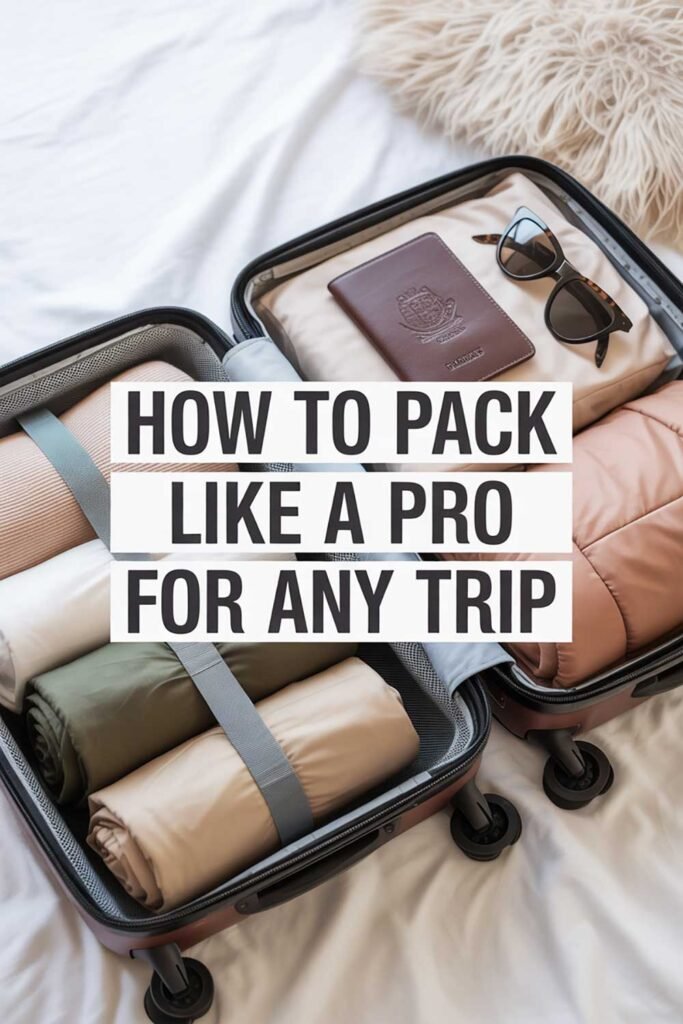
Rolling clothes rather than folding minimizes wrinkles and often saves space.
Wear your bulkiest items on travel days. Heavy pants, walking shoes, and jacket don’t count against bag space when worn.
Fill empty spaces inside shoes with socks, underwear, or chargers.
Place frequently needed items in accessible pockets – phone, passport, headphones, snacks.
Sample Packing Layout
- Main compartment: Packing cube with all clothing, toiletry bag, electronics pouch
- Front pocket: Passport, boarding pass, pen, small notebook, snacks
- Side pockets: Water bottle (empty through security), sunglasses
- Wearing: Walking shoes, pants, long-sleeve layer, jacket
The Complete Personal Item Packing List
Here’s everything for two weeks in one personal item:
Clothing (worn and packed combined)
- 3 tops (1 worn)
- 2 bottoms (1 worn)
- 1 dress or versatile piece
- 1 packable rain jacket (worn or packed)
- 3-4 underwear
- 3 pairs socks (1 worn)
- 1 swimsuit (if needed)
- 2 pairs shoes (1 worn)
Toiletries
- Toothbrush and toothpaste
- Deodorant
- Shampoo/conditioner (solid or tiny)
- Moisturizer
- Sunscreen (small, buy more if needed)
- Lip balm
- Razor
- Minimal makeup
- Medications
- Basic first aid items
Electronics
- Smartphone and charger
- Adapter plug
- Portable battery
- Earbuds
- E-reader (optional)
Travel Essentials
- Passport and documents
- Credit cards and small amount of cash
- Pen
- Small microfiber towel (optional)
- Packable day bag or reusable shopping bag
- Sunglasses
- Small notebook or journal
Optional Additions (space permitting)
- Sleep mask and earplugs
- Small lock for hostel lockers
- Tiny flashlight or headlamp
- Laundry supplies (sink stopper, travel detergent sheets)
Laundry Strategies That Make It Work
Laundry enables personal item packing for any trip length.
Sink Washing Essentials
Quick-dry fabrics transform sink washing from chore to convenience. Wash in the evening, hang overnight, wear in the morning.
Carry a flat universal sink stopper – many hotel sinks don’t hold water without one. Weighs almost nothing.
Travel detergent sheets or solid soap bars work for hand washing. A few sheets handle two weeks easily.
Wring clothes in a microfiber towel to remove excess water and speed drying.
Hang clothes on hangers, shower rods, or travel clotheslines. Most items dry overnight in moderate humidity.
Laundromat Option
Laundromats exist worldwide and handle larger loads when sink washing isn’t sufficient. One mid-trip laundromat visit using all your clothes while wearing your swimsuit as “laundry day outfit” refreshes everything.
Hotel Laundry Services
Expensive but convenient. Worth considering for a single mid-trip refresh if budget allows and time doesn’t.
Handling Different Climates
Personal item packing works across climate types with adjustments.
Warm Weather Destinations
Easiest for personal item packing. Lightweight clothes pack small, and you need fewer layers. Swimwear doubles as workout clothes and casual wear.
Cool Weather Destinations
Layer effectively rather than packing heavy individual pieces. Wear your warmest items on the plane. A merino base layer, long-sleeve mid-layer, and packable jacket handle most cool weather.
If you need serious warmth beyond layering, plan to buy a cheap sweater or fleece at your destination and donate it before returning.
Mixed Climates
The layering strategy handles temperature variation better than packing for specific conditions. Merino wool especially adapts to temperature changes.
What to Do When You Need Something You Didn’t Pack
The reality of minimal packing is occasionally needing something you don’t have.
Buy it locally. Nearly anything you need exists at your destination. Toiletries, basic clothing, medications, and supplies are globally available. This isn’t a character flaw – it’s practical problem-solving.
Borrow or share from fellow travelers in hostels and guesthouses.
Adapt without it. Question whether you truly need the item or if you can manage without. Often you can.
Rent specialized gear for activities requiring equipment you don’t normally carry – hiking poles, snorkel gear, ski equipment.
The point of personal item packing isn’t to suffer without necessities – it’s to start minimal and add only what proves truly necessary.
Common Personal Item Packing Mistakes
Learning from others’ errors improves your packing.
Packing “just in case” items defeats the entire purpose. If you might need it, you probably won’t. Leave it.
Bringing too many shoes is the most common overpacking mistake. Two pairs maximum, period.
Choosing style over function results in clothes that don’t work for travel. Prioritize versatility, comfort, and fabric performance.
Forgetting to weigh your bag can cause airport surprises. Some airlines enforce weight limits on personal items.
Not testing the packing before departure reveals problems at home rather than at the airport.
Packing full-size toiletries wastes space on products you could buy or decant into tiny containers.
Bringing physical books when e-readers or phone apps provide unlimited reading without weight.
Real-Life Personal Item Packing Success
Maria traveled through Southeast Asia for three weeks with just a 20-liter backpack as her personal item. She washed clothes every few days, bought a cheap rain poncho when needed, and never once wished she’d brought more. She says the freedom of ultralight travel far outweighed any minor inconveniences.
Tom flies frequently for business and exclusively uses a personal item sized bag for trips up to two weeks. He has a capsule wardrobe of travel-specific clothing that mixes and matches perfectly. His colleagues are always amazed that his small backpack contains everything for lengthy trips.
The Park family challenged themselves to personal item only packing for a two-week Europe trip with two kids. Each family member had their own small backpack. They did laundry twice, bought a few items locally, and found that kids don’t need nearly as much stuff as parents assume.
Sarah was skeptical that personal item packing could work for her style. After one successful trip, she converted completely. She says the mental freedom of minimal packing matches the physical freedom of light travel.
Building Your Personal Item Packing Skills
Personal item mastery develops through practice.
Start with shorter trips – pack personal item only for a weekend, then a week, building to two weeks.
Take notes on what you use and don’t use. After each trip, identify items that never left your bag.
Invest in quality travel-specific items that pack efficiently and perform well. Better gear enables lighter packing.
Evaluate your toiletries ruthlessly after each trip. Did you use everything? What could be smaller or eliminated?
Develop a packing routine with consistent items and placement. Packing becomes faster and more reliable with practice.
20 Powerful and Uplifting Quotes About Minimal Packing
- “The traveler who masters personal item packing discovers that freedom comes not from having everything but from needing almost nothing.”
- “Two weeks of adventure fits in one small bag when you understand the difference between wanting and needing.”
- “Every item you leave home creates space for spontaneity, flexibility, and the lightness that makes travel joyful.”
- “Personal item packing proves that extraordinary experiences require ordinary amounts of stuff.”
- “The constraint of minimal space forces creativity that results in better packing than unlimited space ever could.”
- “Walking through airports with just an under-seat bag while others struggle with luggage – that’s freedom you can feel.”
- “Your personal item contains everything you need because you’ve learned to distinguish need from habit.”
- “The same clothes worn confidently in different cities create memories, not fashion emergencies.”
- “Ultralight packing isn’t deprivation – it’s liberation from the burden of managing excessive belongings.”
- “Two weeks, one bag, zero checked bag fees – personal item packing is the ultimate travel hack.”
- “The skills you develop packing minimal apply everywhere: discernment, prioritization, and trust in your ability to adapt.”
- “Every successful personal item trip proves that the ‘essentials’ you thought you needed were often optional all along.”
- “The weight you don’t carry in your bag becomes lightness you feel in your travel experience.”
- “Minimal packing creates minimal stress, minimal expense, and maximum flexibility – the perfect travel equation.”
- “Your grandmother traveled the world with less than you’re considering. You can handle two weeks with one small bag.”
- “Personal item packing mastery transforms you from tourist hauling stuff to traveler moving freely through the world.”
- “The contents of your bag matter far less than the experiences you have once you set it down.”
- “Constraint breeds creativity, and the constraint of one small bag creates the most creative packing solutions.”
- “Every personal item trip builds confidence that you can travel even lighter, even longer, even more freely.”
- “The best souvenir from personal item travel isn’t something you bought – it’s the knowledge that you need less than you thought.”
Picture This
Imagine yourself at the airport for your two-week trip to Spain. Fellow travelers wrestle with oversized suitcases, wait in checked bag lines, and stress about overhead bin space. You walk straight to security with a single backpack – your personal item containing everything you need.
Through security in minutes, you find your gate and settle into a seat. No carry-on bag to gate-check if bins fill. No anxiety about your bag arriving at your destination. No fees paid to any airline for luggage.
On the plane, your bag slides easily under the seat in front of you. You have legroom that passengers with stuffed carry-ons blocking their foot space don’t enjoy. Everything you might need during the flight – headphones, snacks, book, charger – sits accessible at your feet.
Landing in Madrid, you walk directly from the gate to the exit while others crowd around baggage carousels. You’re in a taxi to your hotel while they’re still waiting for bags to appear.
Over two weeks, your minimal bag transforms your experience. You move easily through Metro stations without maneuvering luggage on escalators. You walk to accommodations instead of needing taxis for heavy bags. You take spontaneous day trips without worrying about storage.
Mid-trip, you spend an evening doing laundry at a laundromat, reading and people-watching while clothes wash. It takes an hour and costs a few euros. Tomorrow all your clothes will be fresh and ready for week two.
You wear the same outfits repeatedly. In photos, you look great – your carefully chosen pieces work together perfectly. Nobody in Barcelona, Granada, or Seville notices or cares that you wore the same blue shirt three times.
When you want something specific – a warmer layer for a cool evening, a nicer top for a fancy dinner – you buy it locally. The twenty euros spent on a Spanish sweater becomes a meaningful souvenir you’ll wear for years, and it came from space in your bag rather than despite your bag.
The final day arrives and packing takes five minutes. Everything fits easily, exactly as it did at home. Your bag is actually lighter than when you arrived – toiletries used up, food eaten, replaced by small, flat souvenirs.
At the Madrid airport, you walk through security with your single small bag. No checked bag line. No carry-on sizer anxiety. Just smooth, easy movement through the airport while others struggle with their stuff.
On the flight home, you reflect on two incredible weeks – museums, beaches, tapas bars, flamenco shows, day trips, spontaneous adventures. Your minimal bag didn’t limit any of these experiences. It enhanced them by giving you freedom, flexibility, and the mental space to focus on travel rather than luggage.
You’re already planning your next trip. You know now that you can go anywhere for any length of time with just one small bag. The skills you’ve developed, the confidence you’ve built, and the gear you’ve invested in make personal item travel your new normal.
This is the freedom that personal item packing provides. Not sacrifice, not deprivation – just smart choices that create lighter, easier, more enjoyable travel.
Share This Article
Ready to revolutionize your travel packing? Share this article with fellow travelers, minimalists, or anyone tired of baggage fees and luggage hassles! Whether you’re a chronic overpacker or already travel light, this guide shows exactly how to fit two weeks into one personal item. Share it on Facebook, Instagram, Twitter, Pinterest, or send it directly to your travel companions. Help spread the word that ultralight travel isn’t about suffering through trips with inadequate supplies – it’s about discovering the freedom that comes from needing less. Your share might help someone break free from overpacking forever!
Disclaimer
This article is provided for informational and educational purposes only and is based on personal experiences, research, and general minimalist packing practices. The information contained in this article is not intended to be professional travel planning advice or comprehensive airline policy guidance.
Airline personal item policies, dimensions, and weight limits vary significantly between carriers and change frequently. What is described as typical may not reflect your specific airline’s current requirements. Always verify personal item policies directly with your airline before traveling.
The author and publisher of this article are not responsible for any airline fees, denied boarding, gate-check requirements, or problems that may occur related to personal item packing. Travelers assume all responsibility for understanding and complying with airline baggage policies.
Packing recommendations are general guidelines that may not suit all travelers, destinations, climates, or trip purposes. Individual needs vary based on activities, personal preferences, medical requirements, body size, and other factors.
Some travelers may require more items than described due to medical conditions, professional requirements, specific activities, or personal circumstances. This guide represents minimum packing rather than universal requirements.
Laundry availability, costs, and convenience vary by destination. Research laundry options before relying on washing clothes during your trip.
Purchasing items at destinations assumes availability that may not exist in all locations, particularly remote or less-developed areas.
Travel-specific clothing and gear mentioned may require investment. Quality items often cost more than standard alternatives.
Personal item packing may not be appropriate for all trip types including formal business travel, adventure activities requiring specialized equipment, or trips with professional appearance requirements.
Climate recommendations are general guidelines. Research specific weather conditions for your destination and travel dates rather than relying on general advice.
By using the information in this article, you acknowledge that you do so at your own risk and release the author and publisher from any liability related to your packing decisions, airline interactions, and travel experiences.