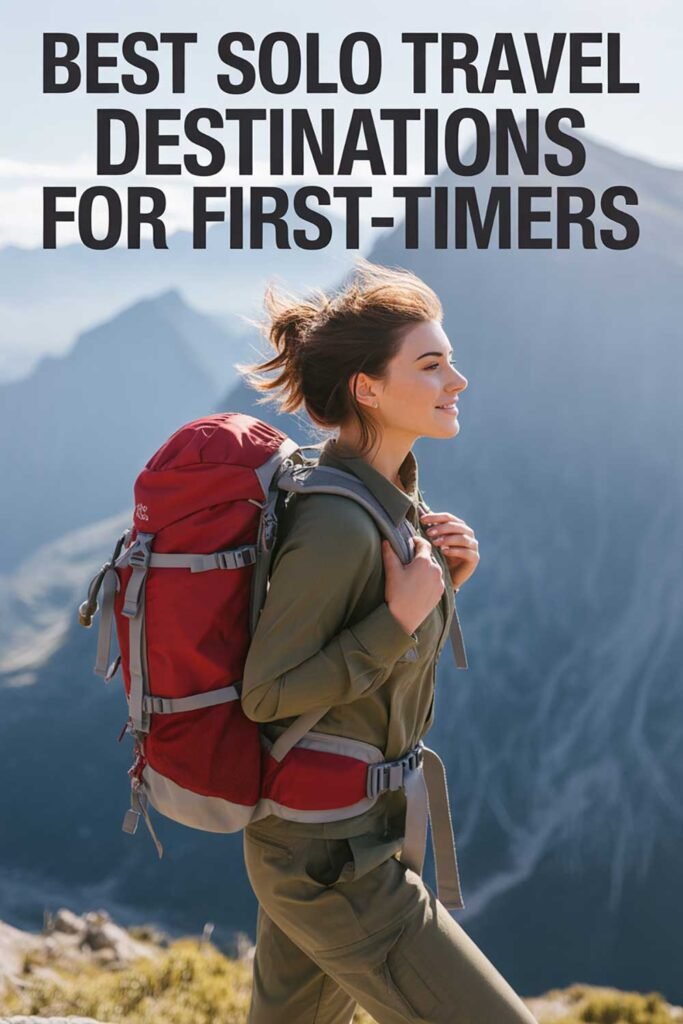
Best First Time Solo Travel Destinations for Confident Beginners
Destinations Offering Challenge and Independence Without Overwhelming Anxiety
First-time solo travel destination selection for confident beginners differs fundamentally from nervous-traveler recommendations because confident beginners don’t need the ultra-safe hand-holding environments like Edinburgh or Copenhagen that minimize every potential challenge, instead seeking destinations providing genuine adventure and cultural immersion while still offering reasonable infrastructure and safety that prevents dangerous situations or completely overwhelming scenarios turning exciting independence into terrifying isolation. The nervous-traveler destinations that work perfectly for anxiety-prone first-timers feel boring to confident beginners who want actual adventure, cultural differences that feel meaningful rather than just slightly different versions of home, and opportunities proving their capabilities rather than sanitized experiences requiring minimal adaptation or problem-solving.
The challenge intensifies because “confident beginner” encompasses wide spectrum—some have extensive group travel experience but never traveled alone, others have minimal travel experience but high general confidence and adaptability, and personality factors matter enormously where introverted confident people need different destinations than extroverted confident people despite similar confidence levels. Generic solo travel advice suggesting random popular cities without distinguishing between hand-holding destinations perfect for nervous travelers versus challenging-but-manageable destinations perfect for confident beginners leaves the latter group either bored in overly-safe locations or occasionally overwhelmed in destinations requiring more experience than first trips should demand.
The truth is that optimal first solo destinations for confident beginners balance meaningful challenge with adequate safety nets—destinations where you’ll need to navigate some language barriers but English exists sufficiently that genuine emergencies don’t become catastrophes, where cultural differences feel significant enough to create growth and adaptation without becoming completely alienating, where solo travel infrastructure exists making meeting people possible if desired but isn’t so overwhelming that you’re never alone, and where interesting activities and experiences justify the trip beyond just proving you can travel solo. These destinations let you feel accomplished and capable without requiring skills or comfort levels that come only from multiple solo trips.
This comprehensive guide identifies specific destinations perfect for confident first-time solo travelers with honest assessments of challenges and rewards, explains how to match destinations to your specific confidence sources and personality type, teaches you to recognize whether destinations require experience you haven’t yet built versus providing appropriate stretch challenges, provides frameworks for preparing mentally and practically for first solo adventures that feel exciting rather than anxiety-inducing, and explains how to build toward more challenging future destinations so your solo travel progression feels natural rather than either stagnating in beginner locations or jumping to advanced destinations before you’re ready.
Understanding Confident Beginner Characteristics
What distinguishes confident beginners from nervous travelers.
Sources of Confidence
Prior group travel experience:
- You’ve traveled internationally with friends/family
- You understand basic travel logistics (airports, trains, hotels)
- You know you enjoy travel and new experiences
- You’re comfortable being tourist in foreign environments
General life confidence:
- You handle unexpected problems calmly in daily life
- You’re comfortable asking strangers for help
- You adapt to change reasonably well
- You don’t catastrophize when things go wrong
Specific skills:
- You navigate new cities easily
- You research effectively
- You’re reasonably outgoing or comfortable with solitude
- You have some foreign language capability (even if basic)
What you’re NOT:
- Extremely anxious about solo travel
- Uncomfortable in any unfamiliar situations
- Requiring extensive English everywhere
- Needing constant social interaction (or conversely, never wanting to interact)
Sarah Mitchell from Portland had group travel experience but never soloed. “I’d been to ten countries with friends but never alone,” she recalls. “I was confident navigating cities and handling travel logistics but nervous about loneliness and safety. I needed destination offering both independence challenges and safety nets—not Edinburgh ultra-safety but not India intensity either.”
Top Destinations for Confident First-Time Solo Travelers
Locations offering meaningful challenge without overwhelming difficulty.
Barcelona, Spain: Perfect Challenge-Reward Balance
Why it works for confident beginners:
- Large enough city that solo travelers are common (never weird being alone)
- Enough English in tourist areas but sufficient Spanish immersion to feel foreign
- Incredible architecture and culture (Gaudí, beaches, food)
- Excellent public transportation
- Mediterranean warmth makes solo dining comfortable
- Both social opportunities (hostels, walking tours) and solitary activities
Challenges that build confidence:
- Some Spanish necessary for authentic experiences
- Pickpocket awareness required (teaches vigilance without danger)
- Navigating beyond tourist zones for best food
- Later dining times (9-10pm) require adaptation
Solo traveler infrastructure:
- Many hostels with social atmospheres
- Free walking tours easy meeting point
- Bar culture with counter seating welcomes solo patrons
- Beach provides solo relaxation space
Ideal trip length: 5-7 days
Budget: $80-120/day comfortable
Marcus Thompson from Denver chose Barcelona for first solo trip. “It felt challenging enough to prove myself—dealing with Spanish, navigating metro, eating alone at restaurants,” he explains. “But safe enough I never felt endangered. The balance was perfect. I felt genuinely accomplished without being terrified.”
Tokyo, Japan: Respectful Independence
Why it works for confident beginners:
- Extremely safe (lowest crime of major cities)
- Solo dining is culturally normal (counter seating everywhere)
- Incredible public transportation (though complex initially)
- Fascinating culture providing genuine immersion
- English signage in tourist areas, apps translate menus
- Activities ranging from temples to cutting-edge technology
Challenges that build confidence:
- Significant language barrier (very limited English outside tourist areas)
- Complex train system requires learning
- Cultural differences are real (bowing, removing shoes, bathing etiquette)
- Navigation using non-Roman characters
Why these challenges work for confident beginners:
- Safety net remains strong despite challenges
- Problem-solving develops genuine skills
- Cultural respect is appreciated even when you make mistakes
- Solo travel is completely normal and respected
Ideal trip length: 7-10 days
Budget: $100-150/day comfortable
Personality fit: Best for introverts comfortable with solitude. Limited English means less casual conversation with locals.
Jennifer Rodriguez from Miami found Tokyo empowering. “The language barrier challenged me but safety was never question,” she shares. “I used translation apps, learned basic phrases, navigated complex trains. I felt incredibly capable by the end. Plus, solo dining being normal meant I never felt awkward eating alone.”
Lisbon, Portugal: Affordable European Charm
Why it works for confident beginners:
- Walkable, manageable size (500K population)
- Safe, welcoming culture
- Affordable (Europe budget without Western Europe prices)
- Enough English but sufficient Portuguese immersion
- Beautiful architecture and neighborhoods for wandering
- Easy day trips (Sintra, Cascais)
Challenges that build confidence:
- Hills require physical fitness and navigation planning
- Some Portuguese necessary for best experiences
- Figuring out tram system
- Venturing beyond main tourist areas for authentic food
Solo infrastructure:
- Growing hostel scene
- Solo-friendly cafés and bars
- Walking tours and day trips easy to join
Ideal trip length: 5-7 days
Budget: $60-90/day comfortable
Best for: Budget-conscious confident travelers wanting European experience without $150/day costs.
Chiang Mai, Thailand: Southeast Asia Introduction
Why it works for confident beginners:
- Very affordable ($40-60/day comfortable budget)
- Strong backpacker infrastructure (easy to meet people if desired)
- English widely spoken in tourist areas
- Incredible food scene
- Temples, nature, activities (cooking classes, trekking)
- Safe, welcoming local culture
Challenges that build confidence:
- Significant cultural differences (Buddhism, Thai customs)
- Tropical climate requires adaptation
- Bargaining at markets
- Transportation beyond tourist zones (songthaews, tuk-tuks)
- Different food (though accessible versions available)
Solo infrastructure:
- Hostels and guesthouses with social scenes
- Digital nomad community (coffee shops, coworking)
- Tours and classes easy to join solo
- Solo dining completely normal
Ideal trip length: 7-10 days
Budget: $40-70/day comfortable
Best for: Budget travelers, those interested in Asia, people wanting strong social infrastructure with independent exploration options.
Amanda Foster from San Diego started solo travel in Chiang Mai. “The backpacker infrastructure meant meeting people was effortless when I wanted company,” she explains. “But I could also explore temples and markets independently. The affordability let me stay longer without money stress. Perfect first solo destination for me.”
Montreal, Canada: North American Starting Point
Why it works for confident beginners:
- North American familiarity with European flair
- Bilingual (French/English) provides language challenge without communication impossibility
- Safe, clean, excellent infrastructure
- Beautiful neighborhoods, culture, food
- Easy from US (no passport needed for Americans, though recommended)
Challenges that build confidence:
- French immersion in many areas
- Navigation between English and French zones
- Solo dining in French restaurants
- Cultural differences despite geographic proximity
Solo infrastructure:
- Hostels and solo-friendly hotels
- Café culture welcomes solo patrons
- Walking tours and activities
Ideal trip length: 3-5 days (close enough for long weekend)
Budget: $80-120/day
Best for: Americans wanting to start close to home, those interested in bilingual/bicultural environments, nervous-adjacent confident travelers wanting gentle challenge.
Melbourne, Australia: Southern Hemisphere Confidence
Why it works for confident beginners:
- English-speaking (eliminates language barrier)
- Extremely safe
- World-class food scene
- Coffee culture with solo-friendly cafés
- Beach access and urban experiences
- Day trips (Great Ocean Road)
Challenges that build confidence:
- Long distance from most origins (tests commitment)
- Expensive ($120-180/day)
- Seasonal reversal (summer when Northern Hemisphere has winter)
- Solo activities in large, spread-out city
Solo infrastructure:
- Backpacker scene in hostels
- Café culture perfect for solo mornings
- Sports culture (cricket, Australian rules football) social if interested
Ideal trip length: 7-10 days (long flight justifies longer stays)
Budget: $120-180/day
Best for: English-speaking confidence builders, those with budget flexibility, travelers who can take longer trips.
Destinations to Avoid for First Solo Trip
Locations better reserved for later solo adventures.
Too Overwhelming for First Solo Trip
India: Incredible destination but intense sensory overload, aggressive touts, significant safety considerations for solo women, extreme cultural differences. Save for third or fourth solo trip.
Morocco (Marrakech): Beautiful but aggressive touts and scammers overwhelm first-timers. Solo women face constant unwanted attention. Try after building confidence elsewhere.
Large complex megacities: Mumbai, Cairo, Lagos, Jakarta. These work for experienced solo travelers but overwhelm beginners with scale, complexity, and challenge level.
Too Easy (Better for Nervous Travelers)
Reykjavik, Iceland: Wonderful but tiny, expensive, extremely easy—doesn’t build much confidence. Better as second or third destination or for nervous travelers.
Copenhagen, Denmark: Very safe, very easy, very expensive. Great for nervous travelers, may bore confident beginners.
Too Remote/Isolated
Rural Mongolia, Patagonia, remote Indonesia: Limited infrastructure, language barriers, challenging logistics. Require experience first-timers haven’t built.
Matching Destinations to Your Personality
Different confident personality types thrive in different destinations.
Extroverted Confident Beginners
Best destinations: Chiang Mai, Barcelona, Lisbon Why: Strong social infrastructure, easy to meet people, hostel cultures, group activities
Activities leveraging extroversion: Walking tours, pub crawls, cooking classes, group day trips, staying in social hostels
Introverted Confident Beginners
Best destinations: Tokyo, Montreal, Melbourne Why: Solo activities normalized, less pressure for constant socializing, museums and cafés for solitary time
Activities for introverts: Museums, hiking, café working, solo restaurant dining, reading in parks, photography
Adventure-Oriented Confident Beginners
Best destinations: Chiang Mai (trekking, cooking classes), Queenstown NZ (adventure capital), Costa Rica
Why: Activity focus, outdoor experiences, adrenaline opportunities alongside culture
Culture/History Focus
Best destinations: Barcelona, Lisbon, Tokyo, Kyoto
Why: Deep history, museums, architecture, cultural immersion opportunities
Emily Watson from Chicago is introverted confident traveler. “Tokyo was perfect for me,” she shares. “Counter seating at ramen shops meant I could eat alone without awkwardness. Museums and temples provided solitary activities I loved. I talked to people occasionally but never felt pressured to be constantly social. My introversion was an advantage rather than disadvantage.”
Preparing for Your First Solo Trip
Mental and practical preparation for confident beginners.
Mental Preparation Strategies
Embrace growth mindset: Challenges are opportunities, not catastrophes. Getting lost helps you learn navigation. Language barriers build adaptability.
Set realistic expectations: Solo travel includes lonely moments and occasional discomfort. That’s normal and okay. Trip doesn’t need to be perfect to be successful.
Define your success metrics: Completing trip? Learning to navigate alone? Enjoying solitude? Meeting people? Having adventures? Clear goals prevent disappointment.
Accept vulnerability: Solo travel makes you vulnerable sometimes. This is growth, not failure.
Plan confidence-builders: Schedule 1-2 activities you know you’ll enjoy to balance challenges with certainty.
Practical Preparation
Book first 2-3 nights accommodation before arriving: Reduces arrival stress significantly.
Join online communities: Facebook groups, Reddit r/solotravel for destination-specific advice.
Share itinerary with someone home: Check-in schedule provides safety net without helicopter parent hovering.
Have backup plans: Know how to reach accommodation from airport via multiple methods. Research hospital locations. Save emergency numbers.
Pack light: Mobility matters more solo. You can’t ask someone to watch bags.
Building Toward More Challenging Destinations
Solo travel progression after successful first trip.
Second Solo Trip Options
After easier first trip (Montreal, Melbourne): Try Barcelona, Lisbon, or Chiang Mai (moderate challenge increase)
After moderate first trip (Barcelona, Lisbon, Tokyo): Try Vietnam, Colombia, or Turkey (significant challenge increase)
After challenging first trip (Tokyo, Chiang Mai): Try India, Morocco, or remote destinations (expert level)
Skill Building Progression
Trip 1: Learn you can travel alone successfully, handle logistics independently, enjoy own company
Trip 2: Tackle language barriers more confidently, navigate complex transportation, venture beyond tourist areas
Trip 3: Handle unexpected problems (missed connections, lost items) calmly, fully embrace solo dining/activities, start taking calculated risks
Trip 4+: Tackle anywhere with appropriate research, feel genuinely confident, help other solo travelers
Geographic Progression
Western Europe → Eastern Europe → Southeast Asia → More challenging Asia → South America → Africa/Middle East
This rough progression builds skills gradually. Individual paths vary based on interests and circumstances.
Common First Solo Trip Concerns
Addressing worries confident beginners still have.
“What if I’m lonely?”
Reality: Some loneliness is normal and okay. It’s not emergency requiring constant companion.
Solutions: Stay in social hostels initially, join walking tours, eat at bars with counter seating (easier to chat), use apps like Meetup for group activities, balance social time with solitude.
Perspective: Loneliness teaches valuable lessons about self-sufficiency and enjoying own company.
“What if something goes wrong?”
Reality: Small things will go wrong. You’ll get lost, miss a bus, order wrong food. These become stories, not disasters.
Solutions: Have emergency contacts, travel insurance, phone with international plan, extra money cushion.
Perspective: Problem-solving builds confidence more than perfect trips where nothing goes wrong.
“What if people think I’m weird for being alone?”
Reality: Most people don’t notice or care. Those who do notice usually admire your independence.
Solutions: Confidence matters more than company. Solo travelers are common. You’re not weird.
Perspective: Worrying about others’ judgments wastes energy better spent enjoying yourself.
“What about safety?”
Reality: Solo travel carries risks, but researched destinations with reasonable precautions are quite safe.
Solutions: Follow standard safety practices, trust instincts, avoid excessive alcohol, don’t advertise that you’re alone and staying at specific place.
Perspective: You face risks daily at home too. Solo travel isn’t inherently more dangerous with appropriate precautions.
20 Powerful and Uplifting Quotes for Confident Beginner Solo Travelers
- “Confident beginners need meaningful challenge and cultural immersion, not ultra-safe hand-holding environments that feel boring after extensive group travel.”
- “Barcelona offers perfect challenge-reward balance—Spanish immersion and pickpocket awareness building vigilance without danger or overwhelming complexity.”
- “Tokyo’s language barrier and cultural differences challenge confident beginners while extreme safety and solo dining culture provide strong safety nets.”
- “Lisbon delivers affordable European charm letting budget-conscious confident travelers experience Europe without $150 daily Western Europe costs.”
- “Chiang Mai’s backpacker infrastructure enables effortless socializing when desired while cultural differences and Thai immersion provide genuine growth opportunities.”
- “Montreal provides North American familiarity with bilingual French challenge—perfect for nervous-adjacent confident travelers wanting gentle difficulty increase.”
- “First solo destinations for confident beginners balance language barriers, cultural differences, and independence challenges with adequate safety and infrastructure.”
- “India, Morocco, and complex megacities overwhelm first-timers despite being incredible destinations—save them for third or fourth solo adventures.”
- “Extroverted confident travelers thrive in social infrastructure destinations—Chiang Mai hostels, Barcelona walking tours, Lisbon’s emerging backpacker scene.”
- “Introverted confident travelers succeed in Tokyo, Montreal, Melbourne where solo activities normalize and constant socializing isn’t culturally expected.”
- “Mental preparation embracing growth mindset transforms challenges into opportunities—getting lost teaches navigation, language barriers build adaptability.”
- “Booking first 2-3 nights accommodation before arriving reduces arrival stress dramatically without over-planning entire trip eliminating flexibility.”
- “Some loneliness during first solo trips is normal and valuable—teaching self-sufficiency and comfort with own company rather than signaling failure.”
- “Small problems will occur—missed buses, wrong food orders, getting lost—these become stories building confidence rather than disasters requiring rescue.”
- “Geographic progression from Western Europe through Eastern Europe to Southeast Asia and beyond builds skills gradually supporting increasingly challenging destinations.”
- “Melbourne’s English-speaking, extremely safe environment suits confident travelers uncomfortable with language barriers but ready for long-distance solo commitment.”
- “Success metrics should include completing trip, learning navigation, enjoying solitude, and having adventures—not perfection or constant happiness.”
- “Trip progression shows first trip proves solo capability, second tackles language barriers, third handles unexpected problems, fourth+ goes anywhere confidently.”
- “Solo travel vulnerability creates growth rather than demonstrating weakness—accepting this reframe transforms potentially scary situations into empowering challenges.”
- “Most people don’t notice or judge solo travelers—those who do notice typically admire independence rather than thinking you’re weird for traveling alone.”
Picture This
Imagine you’re confident person who’s traveled internationally with friends but never alone. You’re considering first solo trip. Your anxious friend recommends Edinburgh—”super safe, everyone speaks English, very beginner-friendly.”
Edinburgh sounds boring. You don’t need that much hand-holding. You want challenge and growth, not safety blanket disguised as destination.
You research confident-beginner destinations. Barcelona captures your interest—Spanish immersion but English exists, incredible culture, safe but requires some vigilance, large enough that solo travelers are common.
You book 7 days in Barcelona. You stay in social hostel first 3 nights (easy to meet people if lonely), then Airbnb final 4 nights (proving you can be completely alone).
You arrive. First day feels overwhelming—Spanish announcements, metro navigation, finding accommodation. But you handle it. By evening you’ve successfully navigated city independently. You feel accomplished.
Days 2-3, you join free walking tour meeting other travelers. You explore Sagrada Familia. You eat tapas at bar with counter seating, chatting with bartender in broken Spanish-English mix. You’re challenged but succeeding.
Days 4-7, you venture beyond tourist areas finding authentic restaurants where menus are only in Spanish. You use translation apps and pointing. You take day trip to Montserrat. You spend afternoon at beach reading alone—completely comfortable with solitude.
One evening your phone dies. You navigate home using memory and asking directions in Spanish. This would have panicked you earlier but now you calmly solve the problem.
You return home having proven you can travel solo successfully. You faced meaningful challenges—language barriers, navigating alone, eating solo at restaurants, managing occasional loneliness. But you succeeded. You feel genuinely confident, not just hoping you might be capable.
You’re already planning second solo trip—Tokyo, pushing yourself harder. Your Barcelona success built foundation making Tokyo feel exciting rather than terrifying.
This is what optimal confident-beginner destinations create—genuine growth through appropriate challenges, proof of capability through independently handling meaningful difficulties, and foundation for increasingly adventurous future solo travel rather than either stagnation in too-easy locations or trauma from too-hard destinations attempted prematurely.
Share This Article
Do you know a confident person considering their first solo trip? Share this article with them! Post it on Facebook to help friends choose appropriate first solo destinations. Pin it to your Pinterest board so you can reference this guidance. Email it to anyone needing confident-beginner solo travel advice.
When we share destination matching for different confidence levels, we help people choose trips building genuine capability. Let’s spread the word that confident beginners need different destinations than nervous travelers!
Disclaimer
This article is provided for informational purposes only and does not constitute professional travel advice or comprehensive safety guidance. Individual confidence levels, travel experience, and personal circumstances vary dramatically.
Destination recommendations represent common patterns for confident beginners. Individual experiences vary—some find recommended destinations too easy, others find them too challenging.
We are not affiliated with any destinations, accommodations, tour operators, or services mentioned. All references are for illustrative purposes only.
Safety assessments reflect general patterns and statistics. Crime and safety concerns exist everywhere. No destination is perfectly safe.
Confidence levels are self-assessed and subjective. What feels appropriately challenging for one person may overwhelm or bore another with similar stated confidence.
Solo travel carries inherent risks including crime, accidents, illness, and other unforeseen circumstances. Travel insurance, emergency planning, and common-sense precautions are essential.
Cultural sensitivity and respect are always required regardless of destination. Research cultural norms and expectations before traveling.
Language barrier recommendations are generalizations. Actual English availability varies by specific neighborhoods, establishments, and circumstances.
Budget estimates assume mid-range travel styles. Actual costs vary by specific choices, seasons, and personal spending patterns.
Personality type recommendations (introvert/extrovert) are generalizations. Individual personalities are complex and don’t fit simple categories perfectly.
Solo female travel faces different considerations than solo male travel in some destinations. Research gender-specific safety information.
Political situations, natural disasters, and health crises can change destination safety rapidly. Verify current conditions before booking.
Progression recommendations (first trip, second trip, etc.) represent common patterns. Individual progression speeds vary based on experience and comfort.
Mental preparation strategies are general guidance, not substitute for professional mental health support if anxiety is severe.
Practical preparation recommendations don’t guarantee problem-free travel. Unexpected situations still occur despite thorough preparation.