30 Travel Organization Hacks for Stress-Free Trips
Organized travel isn’t something that happens to naturally calm people. It’s a system anyone can build once they know the right habits to put in place before the trip even starts. Thirty travel organization hacks from experienced travelers who stopped guessing where things were and started knowing — so the trip itself gets their full attention instead of their bag does.
Grab Our Travel Packing Checklist
Our free packing checklist is built around exactly the kind of organized system these thirty hacks describe — categories assigned, documents covered, pre-departure tasks confirmed. Use it as the foundation for the master checklist you build once and reuse on every trip from here.
Get the Free ChecklistThe most stress-free travelers aren’t the ones who pack the least — they’re the ones who always know exactly where everything is.
Organized travel isn’t something that happens to naturally calm people. It’s a system anyone can build once they know the right habits to put in place.
Before You Pack: The System That Starts Before the Bag Opens
Create a master packing checklist and reuse it on every single trip
The master packing checklist is the single most valuable travel organization tool most travelers never build — not because it is complicated, but because it requires sitting down once, thinking through every trip category seriously, and committing the result to a document that gets used again. The traveler who builds this list once and refines it over the next few trips reaches the point where packing is a checklist exercise rather than a memory exercise, and the forgotten phone charger, the missing travel adapter, and the medication left on the bathroom counter become things that used to happen rather than things that still do. Build it in the notes app, a shared document, or a printed sheet kept with the travel gear. Organize it by category: documents, clothing, electronics, toiletries, medications, and anything specific to the trip type. The first version takes thirty minutes. Every trip after that takes thirty seconds to confirm.
Pack forty-eight hours before departure, not the night before the flight
Packing the night before a trip is the habit that produces the forgotten items, the stress that carries into the first day, and the specific experience of lying awake at midnight wondering whether the phone charger made it into the bag. Packing forty-eight hours before departure gives the brain two full days to notice what is missing — the item spotted on the bathroom shelf the morning after packing that can be added calmly, the document remembered at lunch that can be photographed and filed before leaving. It also separates the mental load of packing from the mental load of the departure day itself, so the morning of the flight is an execution of a plan already made rather than a last-minute assembly of one still being decided. Pack the bag. Close it. Sleep twice before the flight. The difference is real.
Research your destination’s weather, culture, and context before you pack a single thing
The bag packed without destination research is packed for a generic trip rather than the specific one being taken — and the gap between those two trips shows up in the form of the wrong shoes for the cobblestone streets, the wrong clothes for the conservative religious site, and the wrong layer for the weather pattern that every local knew was coming. Ten minutes of destination research before the packing list is opened tells you the actual temperature range, the rainfall probability, the cultural dress expectations, the specific activities you have planned, and whether the accommodation provides toiletries or you need to bring them. The trip that is packed for its actual context requires fewer items and produces fewer problems than the trip packed for the imagined average destination. Research first. Packing list second.
Check the baggage rules for every airline on the trip before you pack
A trip involving two or more carriers is a trip that may involve two or more sets of baggage rules, and the assumption that every carrier’s standard matches the one you flew last time is the assumption that produces the unexpected fee at the gate. Budget carriers frequently impose stricter personal item size limits, lower carry-on weight allowances, and higher fees for non-compliance than the full-service carrier the outbound leg uses. Check every carrier’s baggage policy for every leg of the trip before the bag is packed, not after the scale at home produces a surprising number. Five minutes per carrier before packing is the fee that never happens, the public repack that never occurs, and the departure-morning stress that never starts.
Lay every intended item out on the bed before a single thing goes into the bag
The physical act of laying everything out on a flat surface before packing begins is the step that makes every subsequent decision visible rather than sequential. When everything is spread out together, the duplicate items become obvious — two rain jackets, four pairs of socks for a three-day trip, three items for an activity that is only happening once. The total volume becomes apparent before the bag commits to holding it. The item that does not belong becomes easier to identify when it is next to everything else rather than when it is already in the bag and seems fine because there is still technically room. Lay it out. Look at it honestly. Pack what remains. The bag that goes in organized stays organized. The bag stuffed from a mental list rarely does.
Make a separate pre-departure task checklist alongside the packing one
Packing and pre-departure tasks are two different categories of preparation that most travelers blur into one, with the result that both suffer. The packing list handles what goes in the bag. The pre-departure task list handles everything else: notify the bank, set up international data, forward the itinerary to someone at home, turn off the water, arrange the pet care, confirm the airport transfer, download the offline maps, email the document backup to yourself. These are the tasks that are remembered or forgotten independently of whether the bag is packed perfectly — and they are the tasks whose absence on the road produces the specific stress that careful packing alone cannot prevent. Keep both lists. Run both before every departure. The trip that leaves with both completed is the trip that starts with nothing unresolved.
Let Us Build a Trip That Is Organized Before You Even Start Packing
The itinerary that arrives already confirmed, the accommodation details already in your inbox, and the local context already researched — that is what trip planning with us looks like. Tell us where you want to go and we will handle the organizational heavy lifting before you open a single bag.
Plan Our EscapeBag and Packing Organization: Know Exactly Where Everything Is
Use packing cubes and assign one cube per category without exception
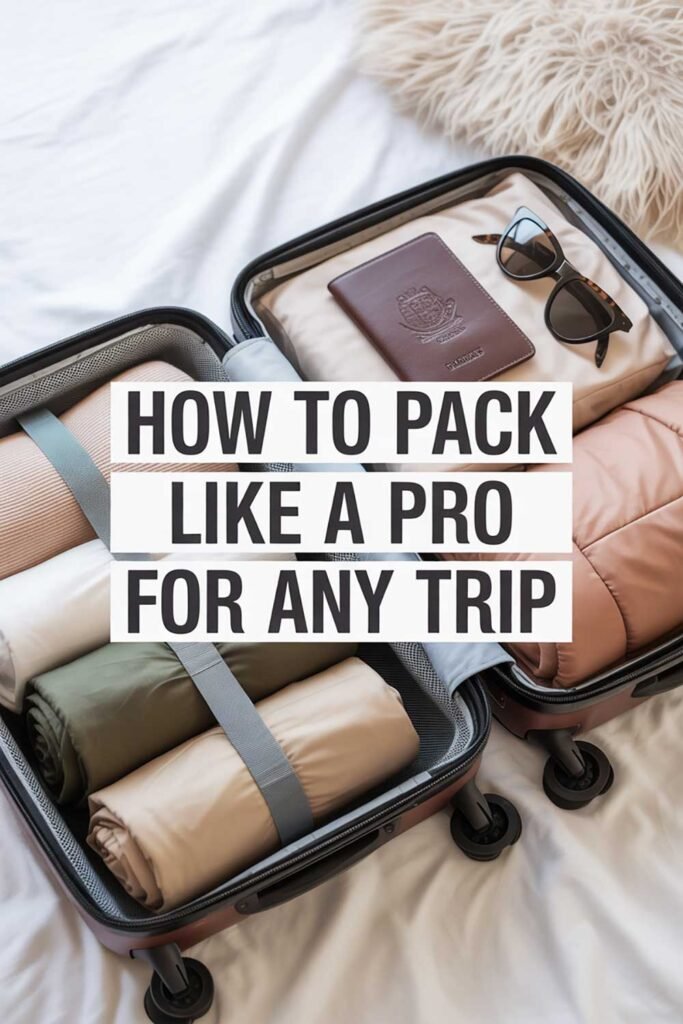
Packing cubes are not a luxury accessory for overcomplicated travelers — they are the organizational system that turns a bag from a suitcase into a filing cabinet. Assign one cube per category and keep that assignment consistent across every trip: tops in one, bottoms in another, underwear and socks in a third, workout or beach gear in a fourth if needed. The category-per-cube rule is what makes the system work, because the cube you reach for is the cube that contains what you need without requiring any other cube to be opened. A bag organized this way can be accessed at the hotel in thirty seconds, repacked at checkout in three minutes, and searched at the airport security tray without producing the pile of loose items that the non-cubed bag always does. One cube, one category, every time. That is the whole system.
Pack your most-needed items on top so you never unpack everything to find one thing
The packing order within the bag is a decision that gets made once at home but pays off or costs repeatedly throughout the trip. The item packed at the bottom is the item that requires every other item to come out before it can be reached — at the hotel after a long travel day, in the security tray at the connecting airport, in the taxi when you realize the key document is somewhere in the bag. Pack the items most likely to be needed first at the top: the charger, the medication, the documents needed at arrival, the change of clothes for the first night, the toiletries for the hotel. The items needed last or only in an emergency go at the bottom. The bag that is packed in order of actual use is the bag that never needs to be fully unpacked to answer a single question.
Roll soft items and pack them into the gaps and corners
Every bag contains space that flat-folded items cannot reach: the corners, the curves, the gap between a packing cube and the bag wall, the space inside the bag’s front pocket that is too shallow for a flat item and too deep to leave empty. Rolled items — socks, t-shirts, lightweight layers — pack into these spaces efficiently and without the air gaps that folded items leave between them. Combined with packing cubes, rolling fills the bag to its actual capacity rather than its apparent one. The bag that looks full from above is often a bag with a quarter of its volume occupied by structural air. Roll the rollers. Fill the gaps. The organized bag is not just the bag where everything has a place — it is the bag that makes efficient use of the space those places occupy.
Keep one packing cube as your daily essentials cube for easy hotel access
Among the cubes assigned by category, designate one as the daily essentials cube — the cube that contains the items needed every single day of the trip regardless of what the day holds: charger, medication, earbuds, lip balm, the day’s cash, and anything else whose daily use makes it a constant retrieve. This cube lives at the top of the main compartment, comes out first at every accommodation, and goes back in first at every checkout. The traveler who uses a daily essentials cube stops rummaging across multiple cubes for the same cluster of items every morning and every evening, because those items are always together, always in the same cube, always in the same place in that cube. The small savings in time and friction across a week of daily retrieval add up to a noticeably more relaxed trip.
Use a dedicated pouch for all cables, adapters, and electronics
Cables and electronics accessories are the items that produce the most disproportionate amount of bag chaos relative to their size. Loose cables migrate into every corner of a bag, tangle with clothing, and produce a search-and-untangle operation every time one is needed. A dedicated electronics pouch — one that holds every cable, every adapter, the portable charger, the earbuds case, and any other small tech item — consolidates the entire category into a single retrievable unit that comes out when tech is needed and goes back in when tech is done. Label the pouch clearly or choose one in a distinct color. Keep the same items in it on every trip. The search for a charging cable should never take more than the time it takes to open one pouch. That is the whole point of the pouch.
Designate a dirty laundry cube or bag from the very first night of the trip
The clean-and-dirty mixing problem — the suitcase at the end of a trip where nothing is clearly categorized and every item requires a sniff test before the wash — is solved entirely by the dedicated dirty laundry container established on night one. A small compression cube, a lightweight mesh bag, or the hotel’s own laundry bag assigned exclusively to worn items from the first evening of the trip keeps the clean and dirty categories permanently separated for the entire stay. At checkout, the dirty bag comes out and goes into the laundry. The suitcase comes home containing only clean items. The organization that the departure packing created stays intact for the entire return trip, and the arrival home does not start with a sorting exercise before the washing machine is even opened.
Documents, Money, and the Travel Wallet: Never Search for Either
Keep a dedicated travel wallet that never gets fully emptied between trips
The dedicated travel wallet is the organizational tool that eliminates the pre-departure scramble to reassemble documents, cards, and cash from wherever they ended up after the last trip. Set it up once with the items it permanently holds: the travel cards with no foreign transaction fees, the travel insurance card, a small amount of backup cash in a commonly useful currency, the frequent flyer or hotel loyalty cards, and any document that travels on every trip. After each trip, return what came out and leave what lives there. The next trip’s wallet preparation is the addition of the trip-specific items — local currency, the specific documents needed — on top of a foundation that is already complete. The traveler who does not own a dedicated travel wallet spends thirty minutes reassembling one before every trip. The traveler who does spends five.
Photograph your passport and every important document before every trip
A photograph of the passport’s data page — the page with the photo, the number, the expiry date, and the machine-readable lines at the bottom — is the document that the consulate’s emergency passport process, the airline’s entry-requirements check, and the hotel’s records system all accept as a working reference when the original is unavailable. Photograph the passport, every visa, every travel document that would be needed to prove identity, book a replacement flight, or make an insurance claim, and save the photos to the phone’s camera roll for offline access before departure. Also photograph the back of every card in the travel wallet so the issuer’s cancellation number is available if the card is lost. Five minutes of photographing before every trip. Available from the phone without any connectivity at any moment they are needed.
Email copies of everything to yourself before you leave home
The photo on the phone covers the lost phone scenario with the cloud backup and the borrowed device, but the email copy covers the scenario where neither is available — the device is dead, the cloud sync has not run, and the nearest internet connection is a hotel lobby terminal. Emailing every critical document to a personal address before departure creates an archive retrievable from any internet-connected device anywhere in the world: the passport data page, the travel insurance policy and emergency number, the flight confirmation numbers, the accommodation addresses, the emergency contacts. Send one email with the subject line that includes the destination and the travel dates. Find it instantly from any device at any time. The thirty seconds to send the email before departure is the backup that the phone’s camera roll cannot cover on its own.
Keep backup cash in a completely separate location from your main wallet
The backup cash strategy is simple: the cash that covers the genuine emergency — the stolen wallet, the ATM that is out of service, the market that is cash-only and the card reader that is down — lives in a location that is not the wallet. A folded note in the inside pocket of the travel jacket, a small amount tucked into the electronics pouch, a reserve in the hotel safe — the specific location matters less than the principle that it is separate from the main cash and card location. The traveler whose entire financial access point is one wallet is the traveler whose single-loss event is also a complete-access event. Keep the backup separate, keep it accessible, and keep it in the same place on every trip so finding it when it is needed requires no memory at all.
Save your accommodation’s address in the local language before you land
The accommodation address in the destination’s own script — not the English transliteration from the booking platform — is the form of the address that local taxi drivers, rideshare apps, and passersby can use immediately without translation delays or errors. Save it from the hotel’s own website or its Google Maps listing before the flight, directly to the phone’s camera roll as a screenshot for offline access. Also save the name of the neighborhood in the local language, since many destinations navigate more naturally by area than by street address. The first arrival at a new destination, carrying luggage and managing the transition from airport to city, is the moment when having this information offline and ready saves the most time and reduces the most friction.
Store every confirmation and booking in a single dedicated folder
Flight confirmations, accommodation booking emails, tour reservations, transfer confirmations, restaurant bookings, and insurance documents spread across an inbox, a booking app, a screenshot folder, and a printed sheet in the bag are documents that are technically all there but practically unavailable at the moment they are needed most. Create one folder — in the email app, in a notes app, or in a travel app like TripIt that aggregates bookings automatically — and route every confirmation into it before the trip begins. The confirmation needed at a hotel check-in desk, an activity meeting point, or a border crossing should take three seconds to find, not three minutes. One folder. Every confirmation. The same folder on every trip. That is the entire document organization system, and it works completely.
How Darius Stopped Repacking the Night Before and Started Arriving Ready
Darius was the friend his travel group called the night before every trip with some version of the same question: have you seen the portable charger, have you packed the adapter, do you know where the hotel confirmation is. He was not disorganized in the rest of his life — his apartment was tidy, his work files were managed, his kitchen was the kind of organized that guests complimented. But travel preparation existed in a separate category in his mind, one where the pressure of the departure date combined with the variable nature of the packing list to produce a ritual of frantic last-minute assembly that left him slightly frazzled before every trip even started. He repacked his carry-on three times before most flights. He accepted this as the cost of travel.
The trip that changed it was one where he missed the outbound flight. Not because he was late — because he spent twenty minutes at the departure terminal looking for the booking confirmation in three different apps and two separate email folders while the gate closed. The confirmation was in the email. It had always been in the email. But his inbox had several hundred unread messages and the search function produced four results with similar subject lines and the wrong one opened first. By the time the right one was found, the gate agent had moved on. The rebooking cost him money and the first night of the trip, and it cost him the specific pride of having been, in that moment, perfectly disorganized.
He built the system that week. One folder for every trip’s confirmations, set up the day the first booking was made. A master packing checklist in a notes app that he updated after every trip with whatever had been forgotten or proved unnecessary. A dedicated travel wallet that lived in the same drawer as the passport and never got emptied of its permanent contents between trips. Packing cubes assigned by category that lived in the luggage when not in use. A pre-departure task checklist separate from the packing list, covering every non-clothing item that needed handling before leaving.
The next trip he packed in forty minutes, forty-eight hours before the flight, without repacking once. The confirmation at the gate took four seconds to pull up. The charger was in the electronics pouch where it always was. The backup cash was in the jacket pocket where he had decided it would always live. He arrived at the destination the way organized travelers always arrive: with energy left for the trip itself, because none of it had been spent on the logistics of getting there. The thirty hacks in this article are the system he wished someone had handed him before the flight he missed. Build it once. Use it every trip.
In-Trip Habits: Stay Organized From Check-In to Checkout
Unpack into the hotel drawers for stays of two nights or longer
The suitcase used as a drawer — rummaged through daily for items buried beneath other items — is the suitcase that gradually becomes less organized for every day it is treated this way. For stays of two nights or more, taking ten minutes to unpack the packing cubes into the room’s drawers and hang items in the wardrobe keeps every category accessible, visible, and separate for the duration of the stay. The daily search for the right item takes seconds rather than minutes. The checkout repack takes five minutes rather than fifteen, because the items are organized by category in drawers rather than scattered across the available surfaces of a bag that has been opened and closed six times. The hotel room is yours for the duration. Treat it like it is and it functions better than the bag ever would.
Return every item to the same spot every single time without exception
The travel organization habit with the highest daily return is the one that feels like the smallest decision: always putting the same item in the same place. The passport goes back in the travel wallet every time it comes out. The phone goes back in the same jacket pocket. The room key goes back on the same nightstand corner. The day bag gets repacked to its standard configuration every evening. These are not significant acts of discipline — they are thirty-second habits whose benefit is the complete elimination of the “where did I put the passport” moment that every traveler who has not built this habit knows intimately. The item that always goes back to the same place is the item that is always where you expect it. The item that goes wherever is convenient is the item you search for.
Do a thirty-second sweep of every space before you leave it
The thirty-second sweep is the habit that recovers the phone charger from the outlet behind the nightstand, the sunglasses from the bathroom shelf, the room key from the pocket of yesterday’s jacket, and the book from under the bed. Perform it before leaving every hotel room, every rental car, every restaurant seat, every tour bus, and every accommodation of any kind. Physically walk the perimeter of the space, check every surface, look under every piece of furniture, open every drawer that was opened during the stay, and check every outlet. The sweep takes thirty seconds when done proactively and a minimum of three hours when the forgotten item requires a return trip, a lost property call, or a replacement purchase. Every space. Every departure. Every time.
Stock your day bag the same way every single day of the trip
The day bag — the smaller bag that goes out for daily exploration while the main luggage stays at the accommodation — is most useful when it is packed the same way every day: the same items, in the same pockets, in the same order. Water bottle in the side pocket. Phone in the front exterior pocket. Day’s cash and room key in the inside front pocket. Sunscreen and lip balm in the top zipper. This consistency means the bag can be accessed on instinct rather than searched from memory, and the moment something is not where it should be is immediately noticeable rather than discovered after a full search. Build the day bag standard on the first morning of the trip. Maintain it every morning after. The bag that is always set up the same way is always ready in the same way.
Use the hotel safe for the same category of items on every single stay
The hotel safe’s organizational power is maximized when it is used consistently rather than variably — the same categories of items stored there on every stay, so the check before departure is a category check rather than a memory search. Passport, backup cash, backup credit card, and any irreplaceable document go in the safe every stay, from the first night. At checkout, the safe check is automatic: open, confirm those four categories are in hand, close. The traveler who uses the safe inconsistently — sometimes for the passport, sometimes not — is the traveler who leaves things in the safe on the occasional trip where the usual pattern was not followed. Consistent use is the habit that makes the checkout safe check reliable rather than approximate.
Photograph where you parked, which bus stop you need, or which exit leads out
A photo takes two seconds and stores the spatial information that memory does not reliably hold across a full day of new experiences. Photograph the parking level and spot number before leaving the rental car. Photograph the bus stop sign with the stop name and the line numbers. Photograph the metro exit sign with the street name on the day you use an unfamiliar transit system for the first time. These photographs are essentially never needed on trips where nothing unusual happens — and they are essential on the trips where the parking level has been completely forgotten after six hours at a theme park or the bus stop is needed again at dark in a neighborhood that looks different at night. The two-second photo at the moment of arrival costs nothing. The search for the car at the end of the day costs considerably more.
Our Curated Collection of Trusted Tools and Official Sources
Everything we use to plan, prepare, and travel with confidence — from official government travel tools to practical planning aids. We have pulled together the resources we trust most so every trip you take is better informed, better prepared, and a lot less stressful from start to finish.
DND ResourcesComing Home Clean: Close the Loop So the Next Trip Starts Right
Separate dirty clothes from clean ones throughout the trip, not at the end
The end-of-trip suitcase where clean and worn items have been mixed together for a week requires a sorting exercise before the washing machine can even be loaded — and the sorting exercise at the end of travel, when the energy for sorting is at its lowest, is the one most likely to skip items or get them wrong. The dedicated dirty laundry cube or bag established on night one (tip twelve) handles this automatically, but the habit that powers it is the daily discipline of putting worn items into the laundry container rather than back into the general packing. This costs nothing extra and takes no additional time — the clothing is going somewhere after it comes off regardless. Directing it to the laundry container rather than the general bag is the thirty seconds that makes the end of the trip and the laundry day after it both significantly simpler.
Photograph your packed bag before you close it for the return journey
The photograph of the fully packed bag — taken before the zip is closed at checkout — is the visual inventory of everything that left with you, in the configuration it was packed in. If the bag is lost, damaged, or inspected without your presence, the photograph documents the contents and their arrangement at the time of packing. If an item is later missing and you cannot remember whether it made it into the bag, the photograph answers the question. It also creates a packing reference for the return trip if the contents need to be reorganized, and it gives you a timestamp that confirms the bag was packed before the room checkout rather than after. Take the photo every time. It takes four seconds and creates a record that a dozen real situations across years of travel will eventually make useful.
Do the room sweep before checkout, not while the taxi is waiting
The thirty-second room sweep done while the bags are still in the room and the door is still openable is a fundamentally different experience from the sweep done after the bags are at the door and the checkout time has passed. Build the sweep into the checkout routine at a fixed point: bags packed and closed, sweep performed, then bags moved to the door, then checkout completed. In that order, every time. The charger behind the nightstand, the toiletry bag on the bathroom shelf, the passport in the safe, and the glasses on the desk all get recovered in the sweep that happens before departure rather than reported as missing from the taxi. Make the sweep part of the checkout sequence rather than a reactive afterthought. Nothing that left the room with you came back with you through leaving it behind.
Restock your travel wallet the day you return, not the day before the next trip
The travel wallet that comes home from a trip often comes home slightly depleted: the local currency spent down to a few coins, the backup cash used for the taxi from the airport, the transit card empty. Restocking it on the day of return — when the details of what was used are still fresh and the energy for small admin tasks has not yet transferred to everything else on the return-home list — means the wallet is complete and ready for the next trip from the day after arrival rather than the day before departure. The habit that makes the dedicated travel wallet genuinely useful across all trips is the reset habit that follows each one. One deliberate reset after every trip. The next trip’s preparation starts before the current one’s bags are unpacked.
Update your master packing checklist after every single trip
The master packing checklist gets better with every trip that tests it — but only if the testing produces an update. After every trip, while the memory of what was missing, what was unnecessary, and what should have been packed differently is still specific and fresh, open the checklist and make the changes. Add the item that was wished for and not there. Remove the item that came back unused on this trip and the last one. Add the destination-specific note that will help on a similar trip. Refine the checklist categories based on how the cubes actually worked. The checklist that is updated after every trip is progressively more accurate and useful, and the traveler who maintains it reaches the point, usually within a handful of trips, where packing is a matter of running the checklist rather than making a hundred small decisions from scratch.
Return every travel item to its designated home within twenty-four hours of landing
The travel organization system only functions as a system when its components are where they are supposed to be at the start of every trip. The packing cubes that come home from a trip and end up in various rooms rather than back in the luggage, the electronics pouch that gets partially emptied onto the desk and left there, the travel wallet that gets moved to a different drawer — these are the items whose absence at the start of the next trip produces a reassembly that defeats the purpose of having a system at all. Within twenty-four hours of every return, every travel item goes back to its designated place: cubes back in the luggage, electronics pouch restocked and back with the bag, travel wallet reset and back in its drawer. The system maintained is the system that works on every departure. The system that drifts is the one that requires rebuilding before every trip.
Book a Trip Organized Enough to Put All 30 Hacks to Work
The organized trip starts with an organized booking — confirmation in the folder from day one, accommodation details confirmed, itinerary built around the actual experience rather than the generic one. Our travel agents plan the trips that give every organizational habit you build somewhere genuinely worth using it.
Book A TripThe master checklist was built once and has been refined ever since. The travel wallet was restocked the day they returned and has been ready ever since. The packing cubes are assigned and the most-needed items are on top. The confirmation took four seconds to find. That is thirty hacks. That is always knowing exactly where everything is.
Picture the Trip That Starts Before You Even Pack
The master checklist is open and the pre-departure task list beside it. The travel wallet is already complete — it has been since the day you returned from the last trip. The packing cubes are assigned by category, the most-needed items are on top, and the daily essentials cube is ready to come out first at every accommodation. Every confirmation is in one folder. The passport photograph is saved offline and the email backup was sent last night. The bag is packed forty-eight hours before the flight and has not been touched since, because there was nothing to add and nothing to second-guess. The departure morning is the execution of a plan already made rather than the making of a plan under pressure. The trip that starts organized stays organized — through every hotel, every transit, every checkout, every return. That is thirty hacks. That is the stress-free trip anyone can build once they know the system.
One More Thing Before the System Is Complete
Print our free Travel Packing Checklist and use it as the foundation for the master checklist you build once and refine forever — categories organized, documents covered, pre-departure tasks confirmed. The same checklist we use before every single trip we take, built around exactly the organizational habits in this article.
Get the Free ChecklistExplore Our Top Picks for a Better Trip
After years of exploring the globe together, these are the exact tools, platforms, and services we rely on for every single trip — personally tested, traveler approved, all in one place. We don’t recommend anything we wouldn’t use ourselves, and this is the collection of booking platforms and travel tools that have made our adventures smoother, smarter, and more memorable.
See Our Top PicksLove Helping Travelers Arrive Organized and Ready?
Helping a traveler build a system that makes every trip better than the last is exactly the kind of work that makes home-based travel agenting genuinely rewarding. If turning your love of travel into a business sounds like the right next move, see how the TravelPreneur system works.
Become An AgentTravel Organization Printables at Premier Print Works
Visit Premier Print Works for packing checklists, pre-departure planners, travel wallets, and organization printables that make every trip easier to prepare for and every return easier to reset from — because the system that works on every trip is the one worth printing out and keeping with the luggage.
Visit Premier Print WorksDisclaimer
The information shared in this article is provided by Don and Diana’s Travels for general informational, educational, and inspirational purposes only. It reflects our personal experiences, opinions, and the experiences of travelers we have worked with. It is not professional travel, legal, or financial advice.
General Travel Information
Travel organization suggestions in this article are based on our personal experience and the experiences of travelers we have worked with. Results will vary based on individual circumstances, destinations, and travel styles. We are not responsible for any outcome arising from reliance on information in this article.
Airline and Accommodation Policies
Baggage rules, size limits, accommodation policies, and related travel regulations vary by carrier and property and are subject to change without notice. Always confirm current requirements directly with your airline and accommodation before travel.
Affiliate and Partner Links
This article may contain affiliate and partner links that pay us a commission at no extra cost to you. Our recommendations are based on real use and genuine belief in the products and services we share.
Composite Stories
Stories on this site combine real experiences from Don, Diana, clients, and travelers we have worked with. Details may be adjusted for privacy and narrative clarity.
No Guarantees
We do not guarantee any specific travel experience or outcome from using the information in this article. Travel involves inherent uncertainty and personal responsibility.
Copyright and Use
All content is the copyrighted property of Don and Diana’s Travels. You may not copy or republish our content without prior written permission. You are welcome to share a direct link with proper credit.
By reading this article, you acknowledge that you have read and agree to this disclaimer.