27 Long Flight Tips for Staying Comfortable From Takeoff to Landing
The difference between landing exhausted and landing ready to actually start the trip almost always comes down to a handful of habits most people do not think about until they are already uncomfortable at 35,000 feet. Twenty-seven tips for the long flight that ends at the destination rather than at the hotel bed for a full recovery day — because every small decision made before the gate is the decision that determines how the landing feels.
Grab Our Travel Packing Checklist
Our free packing checklist is where the long flight comfort kit gets confirmed — the neck pillow, the sleep mask, the compression socks, the snacks, and the lip balm all in the personal item before boarding, so none of the decisions that determine how the landing feels are made at 35,000 feet when it is already too late to make them right.
Get the Free ChecklistEvery long flight is just a collection of small decisions and the ones who land feeling the best are almost always the ones who made those decisions before they ever left the gate.
The difference between landing exhausted and landing ready to actually start your trip almost always comes down to a handful of habits most people do not think about until they are already uncomfortable at 35,000 feet.
What to Pack and Wear Before You Board: The Comfort Kit That Changes the Whole Flight
Pack the entire long-flight comfort kit in the personal item — not the overhead bin where it is unreachable after boarding
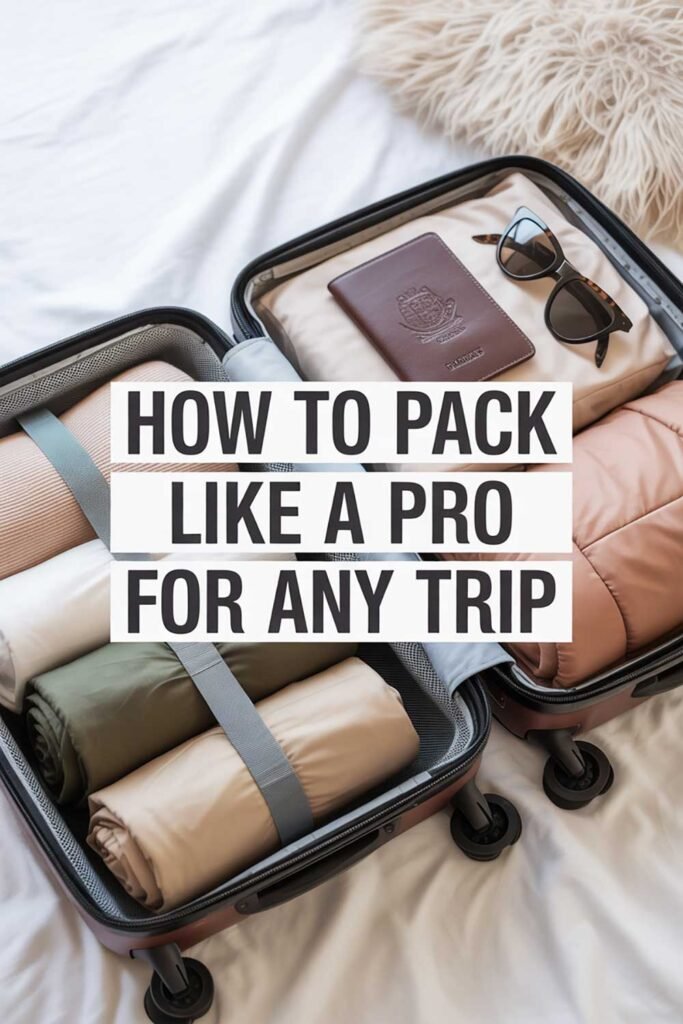
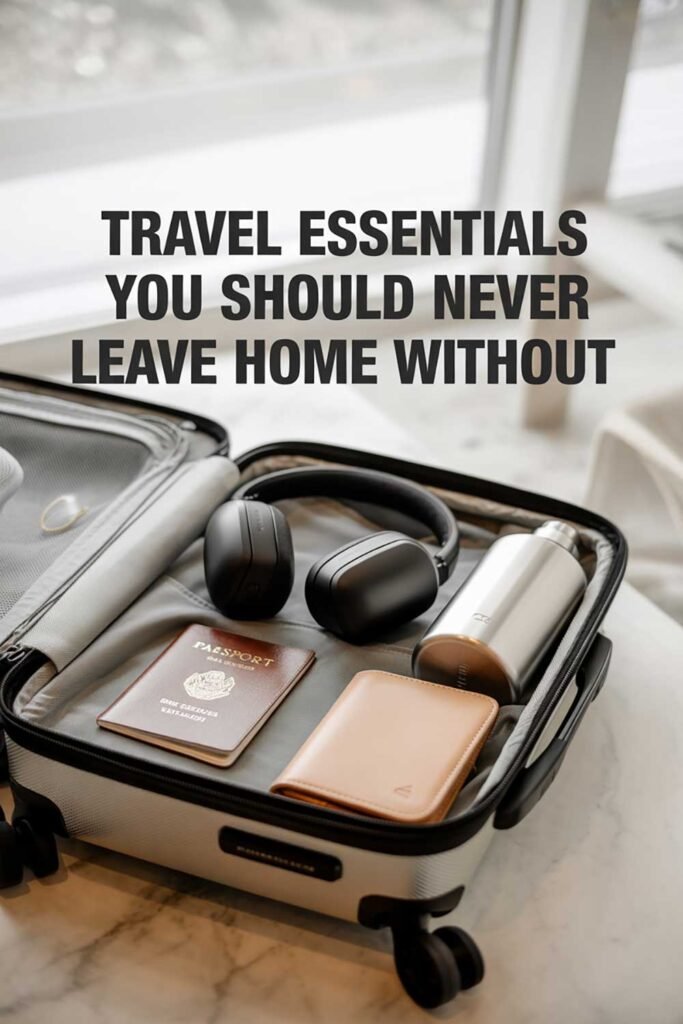
The comfort kit for a long flight — neck pillow, sleep mask, lip balm, earplugs or noise-cancelling headphones, compression socks, a light layer, and any snacks — belongs in the personal item that stays under the seat in front rather than the carry-on in the overhead bin. After the aircraft reaches cruising altitude and the seatbelt sign goes off, the personal item is accessible in thirty seconds. The carry-on overhead requires standing, opening the bin, and managing the overhead access while seated — a process that inconveniences the surrounding row and often results in not retrieving the item at all because the effort is not proportionate to a five-minute comfort decision. Pack the comfort kit into the personal item at home the night before. Confirm every item before boarding. The flight whose comfort kit is reachable from the seat is the flight whose small comfort decisions are made at the right time — when the need arises — rather than the flight where they are deferred because the kit is in the wrong bag.
Use a neck pillow that supports the side of the head — not just the back of the neck
The standard U-shaped neck pillow is the most widely owned and least effectively used long-flight comfort item because most travelers wear it in the position that provides the least support — at the back of the neck where it props the head slightly forward rather than at the side where it prevents the head from falling sideways during sleep. The correct positioning turns the U so the pillow’s bulk is at one side of the neck, supporting the head against the seat’s headrest or window. The scarf-wrap pillow, the memory foam wrap that secures to the seat, and the full-wrap designs that encircle the neck and jaw provide the side support that the standard U-shape struggles to deliver in the standard orientation. Test the pillow’s position before the flight departs. The neck pillow that is correctly positioned before sleep is the neck pillow that contributes to the sleep rather than the one that is removed after twenty minutes because the head is falling forward anyway.
Pack a sleep mask that fully blocks light — cabin light and daylight both
The sleep mask is not a luxury item on a long flight — it is a physiological sleep tool. The cabin’s overhead lighting, the screen light from the seat ahead, the window light on a daytime flight over a bright ocean, and the reading light of the passenger two rows forward all contribute to the light exposure that signals wakefulness to the circadian system. A sleep mask that achieves genuine darkness — not a thin fabric that reduces light, but a contoured mask that blocks it entirely — removes this signal and allows the body to move toward sleep regardless of the cabin’s ambient light conditions. Contoured masks that do not press against the eyes are more comfortable for extended wear than flat masks whose pressure over hours produces the specific discomfort that shortens the wear. Pack the sleep mask in the personal item alongside the neck pillow. Put it on before the lights dim. The flight whose sleep environment was controlled rather than accepted is the flight whose landing feels meaningfully different.
Pack lip balm and a travel-size saline nasal spray — the cabin air is significantly drier than any environment on the ground
Commercial aircraft cabin air is maintained at a relative humidity of between ten and twenty percent — significantly drier than the air in most deserts, which typically ranges from twenty to thirty percent. Across an eight to twelve hour flight, this cabin humidity level dehydrates the skin’s surface, the mucous membranes of the nose and throat, and the eyes in ways that contribute meaningfully to the post-flight exhaustion and discomfort most travelers accept as inevitable. Lip balm applied every two hours prevents the cracked lips that form from the cabin’s dryness. A travel-size saline nasal spray used every three to four hours keeps the nasal passages hydrated, reduces the congestion that pressurization and dry air combine to produce, and contributes to the general comfort of a long flight in a measurable way. Both items are small, inexpensive, and almost universally underused on long flights. Pack both in the personal item. Use both consistently. The landing that feels better than usual often began with these two items applied more consistently than usual.
Wear compression socks on every flight longer than four hours — not as an optional accessory but as a standard item
Sitting in a fixed position for four or more hours reduces blood flow in the lower legs and feet, contributing to the swelling, aching, and heaviness that long-haul travelers recognize as the landing day’s physical companion. Compression socks — graduated compression hosiery that applies gentle pressure at the ankle and reduces gradually toward the knee — improve circulation in the seated position and reduce this swelling significantly compared to standard socks or bare feet. They are available at pharmacies and travel retailers in a range of compression levels appropriate for non-medical use. The compression level most effective for general travel is in the range of fifteen to twenty millimeters of mercury — widely available and sufficient for the circulatory support a long flight requires. Put them on before boarding rather than mid-flight when the feet are already swollen and the socks are more difficult to apply. Wear them for the full flight. The feet that disembark in compression socks feel meaningfully different from the feet that disembarked without them on the previous trip.
Dress in loose, layerable clothing you can adjust throughout the flight — not the tightest or the most structured outfit you own
Cabin temperature on long-haul flights varies by aircraft, route, carrier, and the specific stage of the flight — cold during cruise at altitude, sometimes warmer during descent, and subject to the unpredictable variation that makes any single outfit choice a gamble across a twelve-hour flight. Loose, layerable clothing — the light base layer, the mid-layer that can come off if the cabin is warm, the thin packable jacket for the hours when it is not — provides the flexibility to stay comfortable across the temperature range without the physical constraint of structured clothing in a small seat for a long duration. Elastic waistbands over belted trousers. Soft knit layers over structured cotton. The flight outfit chosen for comfort rather than presentation is the one whose cumulative physical benefit across twelve hours is meaningful in a way that a photograph’s worth of style would never be. Dress for the flight. The destination has a mirror.
Let Us Build the Trip That Makes Every Hour in the Air Worth Arriving Ready For
The long flight endured with comfort and intention deserves a destination worth landing energized for. Tell us where you want to go and we will plan the trip whose first day is the experience the flight was always in service of — not the recovery day the unprepared landing produces.
Plan Our EscapeWhat You Eat and Drink: The Decisions With the Biggest Impact on How You Land
Drink far more water than you think you need — at least eight ounces every hour for the full flight duration
The cabin’s low humidity dehydrates the body at a rate significantly higher than equivalent time at sea level in normal conditions, and the thirst response — which is already a lagging indicator of hydration status — is further suppressed by the mild altitude and the sitting position that together make the dehydration less immediately perceptible than it would be on the ground. The practical minimum for long-flight hydration is approximately eight ounces of water per hour — more if the flight is particularly long, if the cabin is running warm, or if any sleep medications or caffeine are involved. Ask the flight attendant for water at every service. Bring a refillable water bottle to fill after security and request refills. Accept every water offered. The dehydration that produces the post-long-flight headache, the skin tightness, and the mental fog at landing is almost always the accumulation of hours of insufficient water intake rather than a single identifiable cause. Drink consistently across the full flight. The eight ounces per hour is not excess — it is the minimum to compensate for the cabin’s specific drying effect.
Skip alcohol entirely on any flight longer than four hours if landing feeling functional is the goal
Alcohol at altitude dehydrates the body at an accelerated rate, disrupts the quality of sleep whose quantity the long flight allows, and interacts with the low-oxygen partial pressure of the cabin environment to produce the next-morning effect at landing rather than the following morning at home. The glass of wine or the beer that would be a pleasant accompaniment to dinner on the ground produces a measurably worse physiological state at landing on a long-haul flight — the dehydration compounded with the sleep disruption compounded with the mild altitude effect. The traveler who skips alcohol on a long flight and replaces it with water arrives at the destination in a noticeably better state than the same traveler who did not. This is not a theoretical improvement — it is one of the most consistent and reliable single changes available to the long-haul traveler who wants to land feeling human rather than feeling like they need the hotel bed before the trip begins. Skip the alcohol. Drink the water instead. The destination is waiting.
Use caffeine deliberately — match the caffeine strategy to the sleep plan and the destination’s time zone
Caffeine on a long flight is neither universally helpful nor universally harmful — its effect depends entirely on when it is consumed relative to the intended sleep period and the destination’s time zone. A coffee at the start of a daytime flight with no sleep plan contributes to alertness without cost. The same coffee two hours before the sleep window that the flight’s overnight portion offers closes that window and produces the alertness at the wrong time that contributes to landing in a depleted state. Decide the sleep strategy before boarding — whether the flight is daytime (no sleep intended, moderate caffeine acceptable) or overnight (sleep is the goal, caffeine should be stopped well before the sleep period begins) — and consume caffeine accordingly. The coffee ordered by habit rather than strategy is the coffee that kept the sleep from happening at the only opportunity the flight offered. Use it deliberately. Let the sleep strategy, not the habit, determine when and whether to order it.
Bring your own snacks — the right snacks for a long flight and not what the cabin service offers as the only option
The flight’s meal service provides food at its schedule, not the body’s, and the food itself — while adequate — is rarely optimized for the cabin’s physiological environment or the traveler’s specific preferences and dietary needs across a long duration. Bringing snacks from home addresses both: the hunger that arrives between services and whose only alternative would be the overpriced terminal option or the flight’s snack selection, and the preference for specific foods whose comfort or nutritional value the flight service does not reliably offer. The best snacks for a long flight are relatively low in sodium (which compounds dehydration), not overly rich or heavy (which exacerbates the post-meal heaviness the altitude produces), and familiar enough to be reliable rather than novel. Nuts, dried fruit, quality crackers, a banana, a small dark chocolate — simple, calorie-dense, low-sodium, familiar. Pack them in the personal item. Access them between services. The long flight is not the time for the first encounter with a new food.
Eat lighter than usual on a long flight — the cabin environment makes heavy food feel heavier and digest slower
The pressurized cabin at cruise altitude produces mild physiological changes that affect digestion and appetite differently from the sea-level experience: gas in the digestive tract expands slightly at altitude, making bloating from gas-producing foods more pronounced than the same foods would produce on the ground; the stomach empties more slowly, making the feeling of heaviness from a large meal last longer; and the overall metabolic rate slows in the sedentary, reclined position. Eating the same volume on a long flight that would be normal at a table on the ground produces more discomfort at altitude than the same meal at sea level. Eat the flight’s service meals if they appeal, but consider half portions of the denser items and supplement with the personal snacks that are lower in weight on the digestive system. The landing that follows the lightly-fueled flight almost always feels better than the one that follows the flight whose meals were fully completed at every service.
Sleep, Rest, and Light: Make the Flight Work for the Destination’s Time Zone
Decide the sleep strategy before boarding — align it with the destination’s arrival time and time zone
The long flight’s sleep value depends entirely on when sleep happens relative to the destination’s time zone rather than on how tired the body is. A twelve-hour flight from a western departure arriving in the morning at the destination benefits from sleeping through as much of the flight as possible, regardless of whether it departs in the evening or the afternoon. The same flight arriving at midnight benefits from staying awake for as much of it as possible to align with a reasonable overnight sleep at the destination. Deciding this before boarding — sleeping or staying awake, and for which portion of the flight — allows the caffeine, the meal timing, the sleep mask and neck pillow deployment, and the entertainment choices to all support a single coherent strategy rather than competing with each other. The long flight’s sleep is managed, not incidental. The management begins with the decision made before the gate and executed consistently across the flight’s duration.
Put the sleep mask on before the lights dim — not after — and use the neck pillow from the start of the sleep period
The instinct to wait for the cabin lights to dim before putting on the sleep mask or setting up for sleep means the sleep preparation happens after the environmental signal that should have been blocked rather than in advance of it. The sleep mask put on before the lights dim — at the start of the intended sleep period, regardless of the cabin’s current brightness — controls the sleep environment proactively. The neck pillow positioned correctly at the same time establishes the physical sleep posture before fatigue has made good positioning harder to achieve. Both items deployed before the sleep period begins rather than during it produce a sleep setup that is complete rather than staged across twenty minutes of progressively adjusting. Board with the comfort kit accessible. Deploy both items at the start of the intended sleep window. The sleep that follows a prepared environment is measurably easier to reach than the sleep that follows the reactive setup.
Use noise-cancelling headphones rather than earplugs if sleep quality on a long flight is a consistent struggle
The cabin’s ambient noise — the engine drone, the air circulation system, the general cabin murmur — is constant across the full flight and contributes to the background physiological arousal that makes sleep on a plane lighter and less restorative than sleep on the ground. Earplugs reduce this ambient noise. Noise-cancelling headphones eliminate a significant portion of it, specifically the low-frequency constant drone that earplugs address less effectively than higher-frequency sounds. The active noise cancellation technology in quality headphones targets the engine and air-conditioning frequencies specifically and produces a measurably quieter sleep environment than passive earplugs alone. Combined with the sleep mask and the neck pillow, noise-cancelling headphones complete the sensory environment management that makes sleep on a long flight qualitatively closer to sleep in a quiet room than to sleep in a noisy one. They are an investment whose return is paid on every long-haul flight that uses them.
Choose the window seat for sleeping and the aisle seat for movement — pick deliberately based on the flight’s purpose
The window seat and the aisle seat serve different long-flight purposes whose value depends on the individual traveler’s priorities for the specific flight. The window seat provides a wall to lean against during sleep — the single most consistent aid to in-seat sleep that airline seat design offers — and allows the sleeping traveler to remain undisturbed by the neighboring passengers who need to access the aisle. The aisle seat provides immediate aisle access for the every-two-hour walks and for the traveler whose circulation, hydration, or bathroom needs make frequent aisle access more important than the sleeping wall. For a long overnight flight where sleep is the primary goal, the window seat’s sleeping wall is worth the reduced aisle access. For the long flight where staying awake, moving frequently, or accessing the overhead bin easily is the priority, the aisle seat’s immediate access outweighs the sleep wall. Choose deliberately before booking. The seat assignment is a comfort strategy, not just a location preference.
Use melatonin on overnight intercontinental flights to support sleep onset at the destination’s intended nighttime
Melatonin is the body’s natural sleep-onset hormone, produced in response to darkness and the approach of the circadian sleep window. On overnight intercontinental flights whose cabin stays partially lit and whose departure and arrival time zones differ significantly, a low-dose melatonin supplement taken approximately thirty to sixty minutes before the intended sleep period supports sleep onset in the flight’s artificial environment. Doses of 0.5 to 1 milligram are generally considered sufficient for most adults and produce less of the next-day grogginess that higher doses occasionally cause. Melatonin is not a sleep medication — it does not sedate; it shifts the body’s readiness for sleep toward the intended sleep window. For the traveler whose long-haul flights consistently produce poor in-flight sleep and difficult destination adjustment, low-dose melatonin timed to the destination’s nighttime is one of the most accessible and consistently effective tools available for improving both. Consult a healthcare professional if there are specific medical considerations. For most healthy adults, it is available over the counter and widely used for exactly this purpose.
Iris’s First Long Flight That Did Not Cost Her the First Day of the Trip
Iris had taken long-haul flights three or four times, and the pattern after each one was consistent enough that she had come to plan for it: the first day at the destination was the adjustment day. The headache from the dehydration she had not recognized as such. The feet that were noticeably swollen for the afternoon. The general physical diminishment whose specific cause was unclear but whose timing — always the day after the long flight — pointed at the flight as its source. She took the destination’s first day as a cost of the travel rather than as a problem with a specific set of preventable causes.
The first flight she prepared differently was a twelve-hour overnight to Southeast Asia whose arrival was scheduled for early morning at the destination. She bought compression socks two days before. She packed the neck pillow, the sleep mask, and the saline spray in the personal item rather than the overhead bin. She decided before boarding that the strategy was sleep — that she would stay awake for the first two hours to eat the meal service and establish the sleep environment, then sleep for as much of the remaining ten hours as possible. She drank water at every service pass. She skipped the wine with the meal. She took a low-dose melatonin after the meal service. She put the sleep mask on before the lights dimmed and the neck pillow in the position that had been uncomfortable in previous configurations and was, with the adjustment described in these tips, not.
She slept for seven hours. She woke for the landing meal, used the lip balm and saline spray, changed into the fresh layer from the personal item, and arrived at the destination’s morning feeling the specific difference between having slept and having not. The first day was not the adjustment day. It was the first day. She walked to the accommodation from the taxi. She had breakfast at a local café. She was present for all of it rather than managing the aftermath of the flight from the hotel room. These twenty-seven tips are the decisions that produced that first day. Every one of them was made before the gate. That is exactly where the landing starts.
Movement and Physical Comfort: Keep the Body Working Through the Hours
Walk the aisle every two hours for the full duration of any flight longer than four hours — no exceptions
The every-two-hour aisle walk is the single most important physical habit on a long flight, serving circulatory, muscular, and psychological functions that nothing else replaces. Prolonged sitting in the aircraft seat restricts circulation in the lower legs and back, stiffens the hip flexors, and contributes to the physical fatigue that compounds across the flight’s hours. A two-minute aisle walk at two-hour intervals restores circulation, activates the muscles that the seated position holds static, and provides the psychological reset of a changed position and a brief change of scene. Stand when the seatbelt sign is off and the service cart is not in the aisle. Walk to the rear galley or the forward galley. Stand briefly. Walk back. The two minutes cost nothing and prevent the specific stiffness, swelling, and general physical discomfort that the uninterrupted seated position accumulates across a long flight. Set a reminder if needed. The two-hour interval is not a guideline — it is the functional maximum for comfortable seated time on a long flight for most people.
Do seated foot circles and ankle rolls at least every hour even when you cannot get up
During meal service, during the seatbelt-sign-on period over turbulence, and during the hours when the aisle walk is not accessible, the seated circulation exercise is the minimum available alternative. Foot circles — rotating each foot slowly through its full range of motion, five times clockwise and five counterclockwise — and ankle rolls — drawing slow circles with the toe, which activates the calf muscle that assists venous return from the lower leg — provide meaningful circulatory benefit even when the aisle is unavailable. They cost nothing, are invisible to adjacent passengers, and can be performed continuously for a few minutes every hour. The compression socks and the regular aisle walks are the primary circulation strategies. The seated foot exercises are the hourly supplement that maintains circulation between the walks. Together they address the specific circulation problem of long-duration seated immobility that contributes most to the landing-day physical diminishment the flight produces without intervention.
Stretch in the galley area rather than in the aisle so other passengers can pass freely
The galley at the front or rear of the aircraft typically has a small standing space that accommodates light stretching — calf raises, a standing forward fold for the lower back, a gentle hip flexor stretch, and shoulder rolls — without blocking the aisle that other passengers and the service cart need to navigate. The aisle itself is too narrow for stretching whose lateral extension blocks passage and too prominent for the self-consciousness that standing in the middle of the cabin occasionally produces. Use the galley. Ask a flight attendant if the space is available for a brief stretch. Most are accommodating of the request. A two-minute galley stretch at the every-two-hour walk interval — calf raises, lower back stretch, hip flexor, shoulder roll — addresses the specific muscle groups that the seated position holds static and that account for most of the post-flight stiffness. The galley stretch is available on every flight. It costs two minutes and a brief conversation with a flight attendant.
Recline the seat fully if comfort requires it — but do it slowly and considerately
The aircraft seat’s recline function exists for the passenger’s comfort across a long flight, and using it fully — where the seat’s recline range allows and where the flight’s specific context makes it appropriate — provides a meaningfully different physical position from the fully upright one whose continued maintenance across twelve hours contributes to back stiffness and general discomfort. Recline slowly. Check that the passenger behind is not in the middle of using their tray table before pressing the button. The recline that happens gradually and after a brief awareness of the passenger behind is the recline that produces no complaint because it did not happen suddenly while that passenger had a hot drink on the tray. Full recline on a long overnight flight, during meal-service-free cruise hours, is a physical comfort tool whose considered use is entirely appropriate. Upright for meals and during service. Reclined for the long stretch between them.
Adjust the overhead air vent to a gentle flow across the face — not direct cold air onto the skin
The overhead air vent provides airflow whose direction and intensity are adjustable and whose correct setting makes a meaningful contribution to the long flight’s comfort. The vent aimed directly at the face at full intensity produces the specific dry, cold discomfort that contributes to the nasal and skin dryness the cabin environment already creates. The same vent redirected to a gentle flow across the face rather than at it — slightly above the head, at medium intensity — provides airflow that circulates fresh air without concentrating the dryness effect on the most sensitive surface. During sleep, point the vent slightly away from the face or close it partially. During waking hours, maintain the gentle cross-flow that provides air circulation without direct contact. The flight attendant can also reduce the overall cabin temperature if the specific section is particularly warm — asking is always an option whose outcome is typically helpful.
Bring a compact travel blanket for flights whose cabin temperature cannot be predicted reliably
Airline-provided blankets are available on most long-haul flights but not all, and their distribution happens at a specific time during the flight whose coverage of the cold hours — often the early-cruise period before the cabin temperature is fully stabilized and the late-flight hours before the cabin warms for descent — is not always reliable. A compact travel blanket — a lightweight fleece or packable down throw that folds to the size of a paperback and weighs under two hundred grams — covers every cold hour regardless of what the cabin service provides and at what time. Pack it in the personal item alongside the comfort kit. Deploy it whenever the cabin temperature drops below the comfortable threshold rather than waiting for the service cart to pass with the airline’s allocation. The traveler who manages their own temperature rather than relying on the service cart’s schedule is the traveler whose comfort is not contingent on when the blankets are distributed.
Our Curated Collection of Trusted Tools and Official Sources
Everything we use to plan, prepare, and travel with confidence — from official government travel tools to practical planning aids. We have pulled together the resources we trust most so every trip you take is better informed, better prepared, and a lot less stressful from start to finish.
DND ResourcesThe Arrival Strategy: Use the Final Hours to Land Ready Rather Than Just Done
Set the watch and phone to the destination’s time zone at the moment of boarding — not on landing
The time zone adjustment at boarding rather than on landing is a psychological and behavioral intervention that begins the circadian adaptation process at the earliest available moment. When the phone displays the destination’s current time from the point of boarding, every decision made on the flight — whether to sleep, when to eat, when to take melatonin — is made in reference to the destination’s clock rather than the departure city’s. The traveler whose phone shows the destination’s time at boarding who sees that it is midnight at the destination makes the sleep decision differently than the traveler whose phone shows the departure time and whose body has not yet been given the signal to begin the transition. The watch adjustment on boarding is the formal start of the time zone transition. Every meal, sleep, and waking decision made in reference to the destination’s clock across the flight shortens the adaptation period after landing by the hours of adjustment that the flight itself would otherwise have deferred.
Eat in the destination’s mealtime pattern when the flight’s service schedule allows it
The long-haul flight’s meal service is scheduled by the airline’s operational requirements rather than by the destination’s local mealtimes — which often means the meal arrives at three in the morning destination time and the snack service at what would be mid-morning. Eating when the service arrives regardless of the destination’s mealtime sends the digestive system a timing signal that conflicts with the local schedule it is adjusting toward. Where the flight’s schedule allows flexibility — eating the meal when it is served but declining the snack that arrives at the destination’s sleep window, or accepting the beverage service but deferring the heavy portion until closer to the destination’s appropriate mealtime — aligning the eating pattern with the destination’s clock is one of the behavioral inputs that assists the circadian adaptation. This is not always possible across a full long-haul service schedule, but the intention to eat in the destination’s rhythm when the flight’s timing allows produces measurably better adaptation outcomes than eating at every service without reference to when those services fall in the destination’s clock.
Stop all caffeine intake at least four hours before the scheduled landing time
Caffeine’s half-life in the body is approximately five to six hours, which means a coffee consumed four hours before landing still has approximately half its stimulant effect active at the gate. For travelers landing in the morning who plan to sleep a few hours after arrival to manage jet lag, the caffeine from the flight’s final service prevents the sleep whose value at that point is highest. For travelers landing in the afternoon or evening who plan to push through to the destination’s nighttime, the caffeine from the flight’s final service may conflict with the sleep the evening requires. Stopping caffeine four hours before landing leaves the body’s processing of its remaining caffeine time to clear it before the arrival’s sleep strategy requires it. Accept water and herbal tea in the final hours. Save the coffee for the destination’s morning, where its timing supports the day rather than the flight’s final hours.
Use the final hour of the flight to freshen up, change the layer, and prepare mentally for the arrival
The final hour before landing is the transition between the flight and the destination — and using it to prepare for the arrival rather than to extend the flight’s passivity produces a different quality of landing. A quick freshen-up in the lavatory: the face wash with the travel wipe or the water and a brief splash, the teeth brush that confirms arrival freshness, the fresh lip balm application, the saline spray for the dry nasal passages. A change from the sleep layer to the slightly fresher outer layer if the personal item contains one. A few minutes to check the connection details, the accommodation confirmation, the transport to the hotel. These fifteen minutes of active preparation convert the landing from the passive end of the flight into the active beginning of the trip. The traveler who arrives at the gate freshened and prepared arrives differently than the one who arrives as an extension of the seat they occupied for twelve hours. The first day begins in the final hour.
The landing you want was built in the decisions made before the gate — these are those decisions
The long flight is a collection of small decisions that compounds across its hours into the specific physical and mental state whose quality determines how the first day of the trip is experienced. The compression socks worn before boarding prevented the ankle swelling that would have been carried through customs and to the accommodation. The water drunk every hour prevented the dehydration whose headache would have accompanied the first afternoon. The alcohol skipped at the meal service preserved the sleep quality that the meal with alcohol would have compromised. The sleep mask and neck pillow in the personal item produced the seven hours of sleep that the carry-on overhead bin would have made a decision-point rather than a default. The aisle walk at the two-hour mark restored the circulation that two more hours of sitting would have stiffened further. None of these are dramatic changes to the long-haul experience. Each is a small decision. Together they are the difference between the first day of the trip and the recovery day that was not actually necessary. Make the decisions before the gate. The landing is built there.
Book the Long-Haul Destination Worth Arriving Energized For
The long flight navigated with comfort and intention deserves a destination worth stepping off the aircraft ready for. Our travel agents plan the long-haul trips that give the preparation its purpose — and make the first day the destination the trip was always meant to start with rather than the recovery day it used to take.
Book A TripThe compression socks were on before boarding. The water was ordered at every service pass. The alcohol stayed on the cart. The sleep mask went on before the lights dimmed. Seven hours happened. The saline spray was used at the two-hour walk. The final hour was a freshen-up and a preparation rather than an extension of the seat. The first day of the trip was the first day of the trip. That is twenty-seven tips. That is the long flight whose landing did not cost the day that followed it.
Picture the Long Flight That Did Not Cost You the First Day of the Trip
The compression socks were on at boarding. The comfort kit was in the personal item where it was accessible from the seat — neck pillow, sleep mask, lip balm, saline spray, snacks, travel blanket. The window seat was selected at booking because the flight was overnight and sleep was the strategy. The phone was set to the destination’s time at boarding. The meal was eaten light. The wine stayed on the cart. The water arrived at every service and was requested between them. The melatonin was taken thirty minutes before the intended sleep period. The sleep mask was on before the lights dimmed. The neck pillow was correctly positioned. Eight hours happened. The two-hour walk at the galley produced the calf raise stretch that the back needed. The seated foot circles ran through every hour the aisle was unavailable. The final hour was the face wash, the fresh layer, the snack from the personal item, and the accommodation confirmation confirmed from the camera roll screenshot. At the gate: a traveler who had been on a twelve-hour flight and felt like someone who had been on a twelve-hour flight but rested, hydrated, and ready rather than someone who had been sitting in a chair for twelve hours at altitude without any of the decisions that made the difference. The first day was the first day. That is twenty-seven tips. That is how the long flight ends when the decisions are made before it begins.
One More Thing Before the Long Flight Boards
Print our free Travel Packing Checklist and use it to confirm the long-flight comfort kit is packed in the personal item — the neck pillow, sleep mask, lip balm, saline spray, compression socks, travel blanket, and snacks all confirmed before leaving home, so none of the decisions that determine how the landing feels are left to chance at 35,000 feet.
Get the Free ChecklistExplore Our Top Picks for a Better Trip
After years of exploring the globe together, these are the exact tools, platforms, and services we rely on for every single trip — personally tested, traveler approved, all in one place. We don’t recommend anything we wouldn’t use ourselves, and this is the collection of booking platforms and travel tools that have made our adventures smoother, smarter, and more memorable.
See Our Top PicksLove Helping Travelers Arrive at Long-Haul Destinations Feeling Human?
Helping a traveler land energized and ready rather than exhausted and recovering — and booking the long-haul destination they are landing at — is the kind of care that makes a home-based travel agent genuinely worth coming back to. If turning your love of travel into a business sounds like the right next move, see how the TravelPreneur system works.
Become An AgentLong Flight Preparation Printables at Premier Print Works
Visit Premier Print Works for long-flight comfort checklists, travel wellness guides, packing lists, and flight preparation printables that make every long-haul departure more intentional and every landing the beginning of the trip rather than the recovery from the flight that preceded it.
Visit Premier Print WorksDisclaimer
The information shared in this article is provided by Don and Diana’s Travels for general informational, educational, and inspirational purposes only. It reflects our personal experiences, opinions, and the experiences of travelers we have worked with. It is not professional medical, health, or travel advice.
Medical and Health Information
References to compression socks, hydration, sleep, melatonin, circulation, and related health topics in this article are general educational information only. Individual health circumstances vary significantly. Always consult a qualified healthcare provider before making changes to your health practices, travel routine, or medication use. This article does not constitute medical advice and should not be used as a substitute for professional medical guidance.
Melatonin and Sleep Supplements
Melatonin and other sleep supplements are referenced in general educational terms. Their use, appropriate dosage, and suitability depend on individual health factors. Consult a healthcare professional before use, particularly if you have existing health conditions, are taking medications, or are traveling while pregnant or nursing.
Compression Socks and DVT
Compression socks are referenced as a general comfort measure for long flights. They are not a guaranteed prevention for deep vein thrombosis (DVT) or other medical conditions. If you have health conditions that affect circulation, consult a medical professional before long-haul travel.
Affiliate and Partner Links
This article may contain affiliate and partner links that pay us a commission at no extra cost to you. Our recommendations are based on real use and genuine belief in the products and services we share.
Composite Stories
Stories on this site combine real experiences from Don, Diana, clients, and travelers we have worked with. Details may be adjusted for privacy and narrative clarity.
No Guarantees
We do not guarantee any specific travel, health, or comfort outcome from using the information in this article. Individual results vary.
Copyright and Use
All content is the copyrighted property of Don and Diana’s Travels. You may not copy or republish our content without prior written permission. You are welcome to share a direct link with proper credit.
By reading this article, you acknowledge that you have read and agree to this disclaimer.