25 Travel Hacks Every Beginner Should Know Before Their First Trip
Every seasoned traveler has a list of things they wish someone had told them before their very first trip. The best time to learn how to travel well is before you go. The second best time is right now. These 25 hacks cover everything from booking to packing to airports to money to international travel — built from years of travel experience, every one of them earned the slow way so you can get it the fast way instead.
Grab Our Travel Packing Checklist
Every hack in this article becomes easier when you have the right checklist behind it. Our free checklist covers every packing category, every document reminder, and every tech essential most first-time travelers forget until they are standing at the airport wishing they had thought of it at home. Print it once and use it on every trip.
Get the Free ChecklistBooking Smart Before You Ever Leave Home
Book flights on Tuesday or Wednesday
Airlines release their weekly fare sales on Monday evenings. Competing airlines match those fares by Tuesday morning. By Tuesday afternoon through Wednesday, the widest selection of sale fares is available before weekend leisure travelers push demand and prices back up. This is not a guaranteed rule but it is a consistent pattern with enough reliability that booking midweek on a flexible date produces cheaper fares than booking on weekend days more often than chance would explain. Use Google Flights to set your route and watch fares across a date range rather than committing to a single departure day and you will almost always find a cheaper option than your first search.
Use incognito mode when searching for flights
Flight search engines and airline websites use browser cookies to track how many times you have searched a specific route. Some platforms respond to repeated searches by showing higher fares based on your demonstrated interest. Opening an incognito or private browsing window clears cookie history for that session and shows you prices without the influence of your previous searches. It takes three seconds and the potential fare difference on some routes is measurable. Whether or not the price inflation from repeated searching is consistent across all platforms, the habit of searching in incognito costs nothing and ensures you are seeing the cleanest available pricing every time.
Set flight price alerts and wait
Google Flights, Kayak, Hopper, and most major flight search tools allow you to set a price alert for a specific route and receive an email or notification when the price drops. Setting an alert and waiting is the strategy that produces genuinely good fares rather than booking the first price you see and hoping it was a good one. Most domestic fares reach their lowest point six to eight weeks before departure. International fares often have their lowest point two to four months before departure. Alerts set well in advance give you visibility into the fare’s movement over time and let you book confidently when the price reaches a level you know from watching is genuinely good rather than just acceptable.
Check your passport expiration date before you book
Check your passport expiration date the moment you decide to book any international trip, before you enter your payment information on any booking site. Many countries require your passport to be valid for at least six months beyond your intended departure date. An airline will refuse to board you for a destination with this rule even if your passport has not technically expired. Discovering this at the airport check-in counter after booking non-refundable flights is one of the most completely avoidable and genuinely heartbreaking first travel mistakes. Check the expiration date first. If it needs renewal, start the process immediately. A standard US passport renewal takes six to eight weeks by mail. Expedited service costs more and takes less time. Urgent same-week renewal is possible but requires an in-person appointment and documentation of imminent travel.
Buy travel insurance at booking not before departure
Travel insurance that covers trip cancellation typically includes a cancellation coverage window only if the policy was purchased within a specific number of days of your initial trip deposit, usually 14 to 21 days depending on the provider. A policy bought the week before departure provides coverage during the trip but not for the cancellations and disruptions that can arise between booking and departure. Buy it when you make your first non-refundable payment. The premium is the same at booking as it is the day before departure. The protection is significantly broader when you buy early. The most important coverage categories for first-time travelers are medical, which covers healthcare abroad at a cost that can be tens of thousands of dollars without insurance, and trip cancellation for covered reasons including illness, family emergencies, and certain unexpected events.
The best time to learn how to travel well is before you go. The second best time is right now.
Every hack on this list was earned the slow way by someone who wishes they had known it before their first trip. Now you do.
Let Us Help Plan Your First Trip
First trips have more moving parts than any other kind of travel. Flights, accommodation, itineraries, documents, and the confidence that comes from knowing someone experienced has looked at the details. Our travel agents specialize in helping first-time travelers plan trips that change everything. Tell us where you want to go.
Plan Our EscapePacking Right So Every Trip Starts Organized
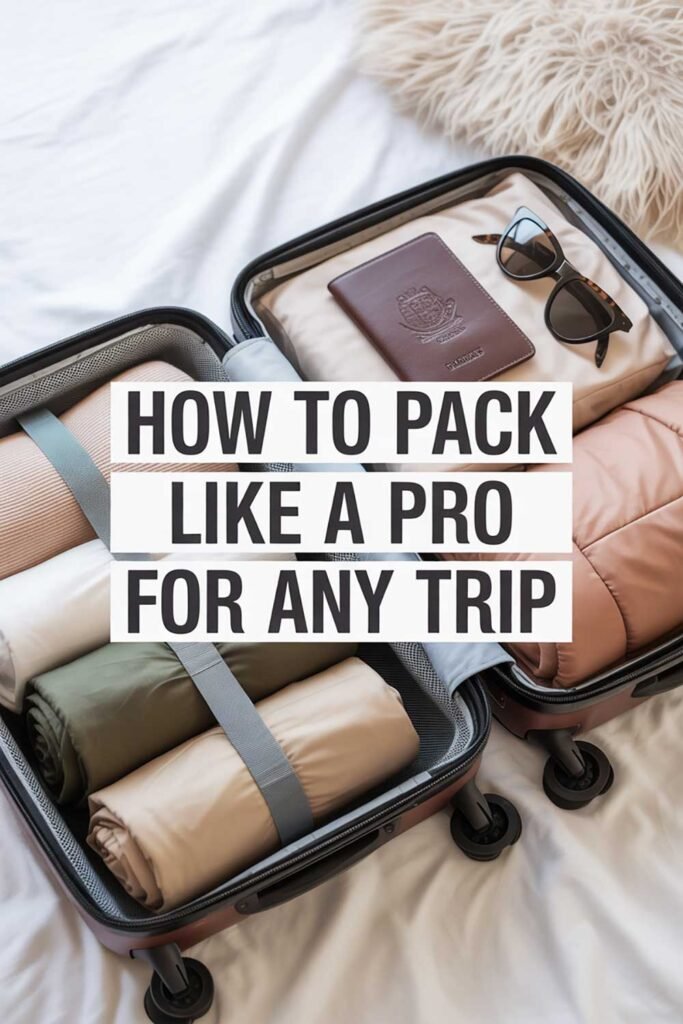
Use packing cubes by category not by day
Packing cubes organized by category are one of the most consistent first-time traveler discoveries that immediately become permanent habits. One cube for tops. One for bottoms. One for underwear and socks. One for sleep clothes. Organizing by category means any specific type of item is always in exactly one cube regardless of which day of the trip it is. When you need a fresh top on day four, you open the tops cube. When you need socks on day seven, you open the socks cube. The system maintains itself because its logic is simple and never changes. Never organize by day, which requires opening multiple cubes to find anything that does not match the outfit you planned at home before the trip revealed itself.
Roll soft items, fold structured ones
Rolling soft fabrics like t-shirts, casual tops, knitwear, underwear, and swimwear reduces wrinkles and saves 20 to 30 percent more space than folding flat. The roll distributes pressure evenly across the fabric rather than concentrating it at fold creases. Structured garments like blazers, dress shirts, and tailored trousers fold flat because they have seams and construction elements designed to hold a specific shape that rolling crushes. Lay structured items flat at the top of the suitcase where nothing compresses them further. Roll everything else into packing cubes below. The two-technique approach produces less wrinkled clothes and more efficient use of every inch of bag space than any single-method approach manages.
Pack your bag three days before, not the night before
The most organized travelers are not naturally more organized than anyone else. They give themselves more time and the preparation takes care of itself. Packing three days before departure gives you time to notice the charger that is not where you thought it was, the prescription that needs refilling, the shoes that have a broken strap when you test them, and the weather forecast that shifted and calls for different layers. None of these discoveries are catastrophic three days before departure. All of them are stressful the night before. Pack non-essential items three days out and reserve the last morning for fresh items only: phone, charger, any medication taken that morning, and last-minute food items.
Wear your heaviest items on the plane
The heaviest items in any packing list are the ones that cost the most bag weight and take the most bag space. Boots, thick sweaters, heavy jackets, jeans, and bulky shoes are all items that make more sense on your body during transit than packed in a bag that has weight limits and size constraints. Wearing your heaviest outfit through the airport costs nothing, saves significant bag weight and space, and means those items do not count toward any airline weight or size calculation. On the return journey this strategy becomes even more important when your bag has accumulated purchases and souvenirs and is closer to its weight limit than it was at departure.
Leave 20 percent of your bag empty at departure
A bag packed to capacity at departure is a bag that comes home with nothing in it that was not there when you left. Travel produces purchases, souvenirs, and accumulated items that need space on the return journey. Leave 20 to 25 percent of your bag empty when you pack. Pack a lightweight foldable tote bag in the bottom as a second bag option for the return. These two habits together mean you arrive home with the market find, the local ceramic, the textile, or the bottle of something local that represents the place better than any photograph and that would otherwise require an extra bag fee or a painful choice between two things you genuinely wanted. The empty space at departure is not wasted. It is the space the trip will fill.
After you pack, weigh your bag at home before you go to the airport. A portable luggage scale costs $8 to $15 and takes ten seconds to use. Airline overweight bag fees start at $50 and reach $200 or more depending on the airline and the degree of excess. The ten-second check at home eliminates the check-in counter anxiety of hoping the scale shows something acceptable and the financial sting of paying an overweight fee that a simple adjustment at home could have prevented. Buy the scale before your first trip and use it before every trip from then on.
Airport and Transit Hacks That Save Time Every Time
Download offline maps before you leave home
Cell signal disappears in foreign countries without a data plan, in rural areas, in underground transit, and in the neighborhoods where you most need navigation and least expect connectivity problems. An offline map downloaded to your phone at home on your own Wi-Fi works with zero signal, zero data cost, and zero connectivity requirement. Google Maps and Apple Maps both allow regional offline downloads that take three to five minutes and cover your entire destination. Download before you leave home, test in airplane mode to confirm it works, and arrive at every destination knowing exactly how to get to your accommodation regardless of what happens to your phone’s connectivity.
Check in online the moment it opens
Online check-in opens 24 hours before departure for most airlines. Check in the moment it opens. Early check-in secures your preferred seat selection before other passengers check in. It also gives you digital boarding passes on your phone and in your email before you ever leave for the airport, eliminating any check-in counter queue and reducing the airport time required before your flight. Save your boarding pass in three places: your airline app, your phone wallet or screenshot, and forwarded to your email. One accessible from any browser anywhere. One accessible without connectivity. One accessible if your primary app fails at the gate.
Arrive at the gate 15 minutes before boarding begins, not before departure
Boarding for most flights begins 30 to 45 minutes before scheduled departure. Arriving at the gate 15 minutes before boarding begins, which is 45 to 60 minutes before departure, gives you relaxed time to settle, use the restroom, organize your in-flight items, and board early without rushing. Early boarding means more overhead bin space, time to stow your carry-on before the rush, and the settled feeling of being in your seat before two hundred other people arrive. The gate agent who sees a calm, organized early boarder occasionally has a seat upgrade available for guests who were notably pleasant and prompt.
Put your toiletry bag and electronics at the top of your carry-on
Security screening requires removing your laptop and your liquids bag from your carry-on. These items should be at the very top of your carry-on, accessible in one motion without moving everything else. A toiletry bag buried at the bottom requires unpacking most of your carry-on at the security conveyor, slowing the queue and producing the specific social embarrassment of being the person that makes everyone behind them wait while they excavate their bag. Everything that security touches goes at the top. Practice this placement at home before your first trip until it becomes the automatic system rather than something you remember to do.
Keep your boarding pass in three accessible places
A boarding pass that fails to load at the gate produces a specific airport panic that is entirely preventable with thirty seconds of preparation before you leave for the airport. Save your boarding pass in your airline app for standard use. Screenshot it and save it to your camera roll for offline access without connectivity. Forward the confirmation email to yourself so it is accessible from any browser anywhere. Three locations means no single failure eliminates access. A phone that goes to airplane mode at the gate still has the screenshot in the camera roll. A phone that dies has the email copy accessible from a borrowed device. The boarding pass in three places is always a boarding pass.
The Travel Gear Behind These Hacks
The packing cube set that turned every trip from chaotic to organized, the portable luggage scale that saved us from overweight fees, the travel document wallet that keeps every paper in one place, and the universal adapter that simply lives in our electronics pouch permanently. Real picks from the real trips where each of these hacks became permanent habits.
DND FavoritesMoney Hacks That Save Real Money on Every Trip
Get a no-foreign-transaction-fee card
Most standard credit cards charge one to three percent on every international purchase. On a two-week international trip where you spend $3,000, that is $30 to $90 in fees simply for using your own money in another country. Several travel-focused credit cards eliminate this fee entirely, some with no annual fee. Apply for one before your first international trip and use it for every purchase abroad. The application takes ten to fifteen minutes online. The ongoing benefit on every international trip compounds across every dollar spent in a foreign currency for the rest of your travel life. This is one of the simplest and most immediately financially impactful travel habits available to any traveler.
Notify your bank before every trip
Banks monitor spending patterns for fraud protection and flag international transactions as suspicious behavior for accounts with no travel history at that destination. A flagged transaction triggers an automatic card freeze that can happen within minutes of your first foreign purchase. Standing at a foreign ATM or a check-in counter with a frozen card and no immediate way to unfreeze it is one of the most stressful and preventable first international travel experiences. Call your bank and every card you plan to bring at least a week before departure. Tell them your destination countries and your travel dates. The notification takes three to five minutes per card and eliminates the freeze scenario entirely.
Withdraw cash from local ATMs, not airport exchange counters
Airport currency exchange counters offer significantly worse exchange rates than local bank ATMs in the city. Most airport exchange desks charge both a poor rate and an additional transaction fee. On a $300 currency exchange the difference can be $20 to $40 purely from the choice of where you exchanged. The correct approach: bring a small amount of home currency or exchange just enough for your first hour needs, your first taxi fare and a coffee, at the airport. Then withdraw your main cash supply from a local bank ATM in the city using your no-foreign-transaction-fee card. The ATM gives you the inter-bank exchange rate, which is the best rate available to retail customers.
Keep a backup card in a separate location from your wallet
A wallet that is lost or stolen takes every card in it with it. A backup credit card kept in a completely separate location from your main wallet, inside a zippered inner bag pocket, in a hidden waist pouch, or in a different bag entirely, survives every scenario that compromises your wallet. The backup card should be a different card from a different bank than your primary card so that a system outage at one institution does not disable both simultaneously. The backup has one purpose: to work when the primary does not. Keep it accessible enough to reach within two minutes in an emergency and secure enough that it is not in the same theft risk zone as your main wallet.
Always carry some local cash
Card payment acceptance varies dramatically by destination and by the specific type of merchant you encounter. Local restaurants, markets, street food vendors, taxis without card terminals, tips for guides and service staff, small admission fees at sites, and cash-only attractions are all scenarios where a card is either declined or simply not accepted. Having $30 to $50 equivalent in local currency at all times covers the vast majority of cash-only situations a traveler encounters in any destination. Keep it in a location separate from your cards and your backup card, ideally in a dedicated cash pouch or an interior pocket, so a card loss event does not simultaneously eliminate your cash access.
Twenty-Five Lessons in One Trip
Aaliyah came home from her first solo trip with a list. Not a packing list. A lessons list. She had booked the flight at full price on a Saturday without price alerts. Her passport had expired months before she even started planning and the rush renewal had cost triple the standard fee. She had no travel insurance. Her card was frozen at the first ATM because she had not notified her bank. She paid airport exchange rates for her first cash and did not realize until later how much that had cost her.
She had packed the night before and forgotten the charger that was still plugged in. She had no packing cubes and spent the trip opening and repacking a full suitcase every morning to find one item. She had no offline maps and got genuinely lost in a neighborhood without data on her first afternoon. She did not check in online and had the middle seat of a transatlantic flight that she could have changed if she had checked in the moment it opened.
At the airport coming home, her bag was overweight. She stood at the counter and paid the fee and rearranged her bag on the floor of the check-in area while other passengers walked around her. She did not have enough room in her bag for the two things she had wanted to bring home from a market. She left one of them behind.
None of these things ruined the trip. The trip was extraordinary. It changed the way she understood the world and the way she understood herself in it. But she sat on the plane home and wrote down every problem she had encountered and looked up the solution to each one. The list she built that flight is the list in this article. She has used every one of these hacks on every trip since. Not because she was naturally a prepared traveler. Because the first trip taught her exactly what being prepared meant.
Book the Trip That Puts All 25 Hacks to Work
Every hack in this article works best when the trip behind it was planned well from the beginning. Our travel agents handle the flight research, the accommodation selection, the itinerary organization, and the confirmation tracking so your planning system has everything it needs before you ever open a packing cube. Let us build the trip. You pack the bag.
Book A TripFrequently Asked Questions
These are the questions first-time travelers ask most often after reading through these hacks. Real answers from real beginner travel experience.
Which of these 25 hacks makes the biggest difference on a first trip?
If you could only implement five before your first trip, implement these: check your passport expiration date before booking, notify your bank before departure, download offline maps before you leave home, get a no-foreign-transaction-fee card, and pack your bag three days before departure. These five address the five categories of first-trip problems, document issues, money access, navigation failure, unnecessary fees, and departure-morning chaos, that produce the most disruptive experiences for first-time travelers. Everything else on the list compounds the benefit of getting these five right. But these five alone convert most potential first-trip crises into smoothly managed travel.
How much does it cost to implement all of these hacks?
Most of these hacks cost nothing beyond your time. Booking in incognito, setting price alerts, checking in online early, saving boarding pass screenshots, emailing document copies, downloading offline maps and Google Translate, and leaving early are all free. The gear purchases that add the most value across multiple trips are packing cubes at $20 to $35 for a quality set, a luggage scale at $8 to $15, and a universal travel adapter at $15 to $25. The no-foreign-transaction-fee card costs nothing if you choose a no-annual-fee option. Travel insurance costs one to three percent of your total trip cost. The total one-time gear investment for everything mentioned is under $80 and most of it lasts for years of trips.
Is it really worth learning to travel with a carry-on only?
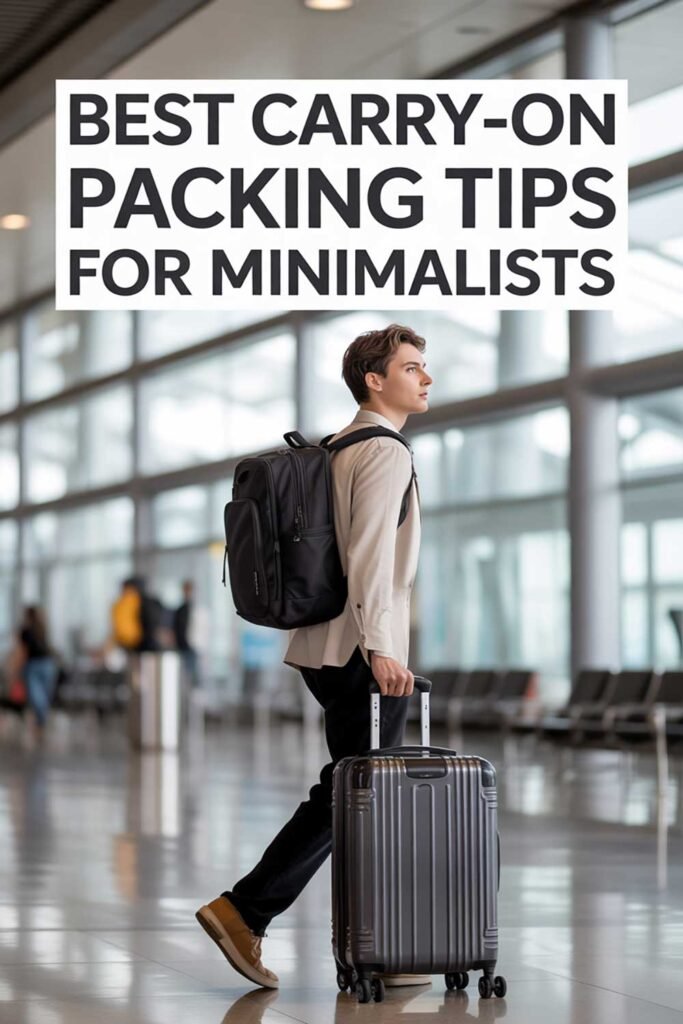
For trips of up to two weeks, carry-on only travel produces a genuinely different and almost always better travel experience. You walk straight out of the airport without waiting at baggage claim. You never lose a bag. You never pay checked bag fees. You board and deplane faster. You can take public transport to your accommodation without managing a large suitcase. A standard carry-on sized 22 by 14 by 9 inches holds a complete two-week wardrobe when it is built around a capsule approach using packing cubes and wrinkle-resistant fabrics. The first carry-on only trip feels slightly uncomfortable because it requires trusting that less is actually enough. Every trip after it reinforces that it genuinely is. Most experienced travelers who learned carry-on only travel do not go back to checked bags for trips under two weeks.
How do you handle the anxiety of a first solo trip?
The anxiety of a first solo trip is almost entirely addressed by the preparation in this article. Most first-trip anxiety is not about the destination or the experience. It is about the uncertainty of not knowing how the logistics will work, what will happen if something goes wrong, and whether you have everything you need. Each hack in this list reduces a specific uncertainty. Knowing your passport is valid eliminates one anxiety. Having offline maps eliminates navigation anxiety. Having a notified bank and a backup card eliminates money access anxiety. Building a loose itinerary eliminates the rigidity anxiety that makes every travel delay feel catastrophic. The more of these habits you implement, the more the anxiety is replaced by confidence because confidence in travel is not the absence of problems. It is the knowledge that when problems arise you have already thought about how to handle them.
What should a first-time international traveler research about their destination before going?
The minimum pre-trip research for any first international destination covers five areas. Entry requirements: does your passport need a visa, does it need minimum validity beyond your return date, and are any health documents required for entry. Currency and payment: what currency is used, how widely are cards accepted, and what is the approximate daily budget for your travel style. Transportation from the airport: what are the safe and reasonably priced options to your accommodation, what does it typically cost, and what should you avoid. Local safety and customs: what areas require extra awareness, what cultural practices deserve respect (tipping customs, dress codes at religious sites, greeting norms), and what does your government’s current travel advisory say. Health: are any vaccinations recommended or required, what are the food and water safety standards, and is there anything health-specific about the climate or environment. This research takes two to three hours total and eliminates almost every preventable first-international-destination mistake.
How many of these hacks apply to domestic trips as well as international ones?
Approximately eighteen of these twenty-five hacks apply equally to domestic and international travel. The five that are primarily international are the no-foreign-transaction-fee card, the bank notification, the local ATM versus airport exchange advice, the local cash guidance (though small amounts of cash are useful domestically too), and the Google Translate offline download. Everything else, booking hacks, packing system hacks, airport hacks, the loose itinerary approach, leaving early, packing cubes, offline maps for domestic areas with coverage gaps, and document organization, applies with equal value to domestic travel. Beginning travelers often focus on international travel as the place where preparation matters most. The habits built for international travel, when applied to domestic trips as well, make every trip of any destination smoother, more organized, and less stressful.
You did not need to have traveled before to travel well. You only needed someone to tell you these things before you went. Now someone has.
Picture Your First Trip With All 25 of These
You checked the passport expiration date before you booked. You searched in incognito with a price alert set. You bought travel insurance at booking. You packed three days before in category-organized packing cubes with 20 percent empty for the trip home. You wore your heaviest shoes through the airport. You checked in online the moment it opened and have three copies of your boarding pass. Your offline maps are loaded and tested. Your bank is notified. Your no-fee card is in your wallet and your backup is in your inner pocket. Your hotel address is a screenshot in your camera roll. Your documents are in your email and a copy is with someone at home. You left an hour before you thought you needed to. You are at the gate early, settled, ready. The trip is about to change everything for you and you are as prepared as anyone you will meet on the other side of the boarding door. That is the first trip every traveler deserves to have.
One More Thing Before You Go
Print our free Travel Packing Checklist and use it alongside these 25 hacks on your first trip. Every category covered, every document reminder included, every tech essential listed, and every packing category organized so that departure morning is fifteen minutes of calm final preparation rather than the chaotic scramble most first-time travelers experience. The same checklist we use before every single trip we take.
Get the Free ChecklistExplore Our Top Picks for a Better Trip
From the packing cube set that made every trip organized from the first use to the universal adapter that lives permanently in our electronics pouch, see the travel products and resources we actually use and recommend behind these 25 hacks. Real picks from real travel across years of trips of every type and destination.
See Our Top PicksTravel Prints and Printables From Our Shop
Visit Premier Print Works for travel journals, trip planners, packing list printables, world map prints, and wall art that makes every adventure a little more beautiful and a lot more organized from the first booking confirmation to the last memory made.
Visit Premier Print WorksDisclaimer
The information shared in this article is provided by Don and Diana’s Travels for general informational, educational, and inspirational purposes only. It reflects our personal experiences, opinions, and the experiences of travelers we have worked with. It is not professional travel, legal, financial, or security advice, and it should not be relied on as such.
Travel, Visa, and Entry Requirement Information
Visa requirements, passport validity rules, entry documentation requirements, airline policies, airport security procedures, and related travel regulations change frequently and vary significantly by destination, citizenship, and current government policies. Always verify current requirements through your government’s official travel advisory and the destination country’s official authorities before booking and before travel. We make no guarantee that any regulatory information in this article is current, complete, or applicable to your specific journey.
Financial and Credit Card Information
Any information about credit cards, no-foreign-transaction-fee cards, travel cards, currency exchange, or ATM use in this article is general educational content only and not financial advice or a recommendation to apply for any specific financial product. Always read the full terms and conditions of any card or financial product and consider your own financial situation before making any financial decision. We are not responsible for any financial outcome from use of the information in this article.
Travel Insurance Information
Travel insurance guidance in this article is general educational information only and not professional insurance advice. Policy terms, cancellation coverage windows, pre-existing condition rules, and coverage specifics vary significantly between providers and individual policies. Always read your specific policy documents in full before relying on any coverage expectation. We are not insurance agents or brokers and are not responsible for any outcome related to insurance decisions made based on information in this article.
Affiliate and Partner Links
This article may contain affiliate links, partner links, referral links, and links to products or services that pay us a commission. If you click a link and book a trip, make a purchase, sign up for a service, or complete any qualifying action, we may earn a small commission at no extra cost to you. This includes but is not limited to links to our travel booking platform, host agency, recommended products, the Premier Print Works shop, and any third-party retailers or service providers mentioned in the article. Our recommendations are based on real use and genuine belief in the products and services we share. Commissions help support the cost of running this site and producing free content for our readers.
Third-Party Websites and Services
We may link to third-party websites, services, and resources for your convenience. We do not control these sites and are not responsible for their content, terms of service, privacy practices, pricing, availability, accuracy, customer service, refund policies, or any product or service they sell. Your use of any third-party site is entirely at your own risk and subject to that site’s own terms and policies.
Health, Safety, and Personal Responsibility
Travel involves personal risk. You are solely responsible for your own health, safety, travel insurance, medications, vaccinations, documentation, financial decisions, and choices while planning or taking any trip. We strongly recommend purchasing comprehensive travel insurance for every trip. Don and Diana’s Travels, its owners, employees, contractors, and affiliates accept no liability for any loss, injury, illness, documentation problem, financial loss, missed flight, delay, cancellation, theft, or inconvenience arising from your use of the information in this article or from any travel decisions you make.
Composite Stories and Characters
Some stories, examples, and traveler experiences shared on this site are composites. They are drawn from the real experiences of Don, Diana, clients, friends, and travelers we have worked with over the years. Names, identifying details, locations, and circumstances may be combined, changed, or fictionalized to protect privacy and to better illustrate a point. Any resemblance to a specific real person beyond the composite portrayal is unintentional.
No Guarantees
We do not guarantee any specific result, outcome, savings, experience, or financial return from using the information, tips, services, or products mentioned in this article. Your results depend on many personal factors, including your own choices, effort, circumstances, and external conditions outside of our control.
Copyright and Use
All content in this article, including text, images, graphics, design, and original stories, is the copyrighted property of Don and Diana’s Travels unless otherwise noted. You may not copy, republish, redistribute, modify, sell, or reuse our content in whole or in part without our prior written permission. You are welcome to share a direct link to this article with proper credit.
By reading and using the information in this article, you acknowledge that you have read, understood, and agree to this disclaimer in full.