25 Cruise Packing Tips for First-Time Cruisers
Your first cruise requires one wardrobe that works for five completely different occasions, and the cruisers who nail it are the ones who packed with intention before they ever stepped on the gangway. Twenty-five cruise packing tips from experienced sailors, handed to you before your very first voyage so you can spend less time worrying about your suitcase and more time enjoying the sea.
Grab Our Travel Packing Checklist
Our free packing checklist includes a cruise-specific section organized by the same categories as this article — clothing for every occasion, cabin gear, health essentials, tech, and smart packing strategies — so the first cruise suitcase is confirmed complete before embarkation day.
Get the Free ChecklistTwenty-five cruise packing tips from experienced sailors, handed to you before your very first voyage so you can spend less time worrying about your suitcase and more time enjoying the sea.
The cruisers who nail it are the ones who packed with intention before they ever stepped on the gangway — one wardrobe for five completely different occasions.
Clothing: One Wardrobe for Five Occasions
Pack formal wear for elegant nights — it is not optional
Every major cruise line designates at least one to two evenings per voyage as formal or elegant nights — occasions where the ship’s main dining rooms and featured restaurants require a dress code that ranges from smart casual to black tie depending on the line. The first-time cruiser who does not pack for these evenings discovers the dress code at the maitre d’s podium. A single formal outfit — a cocktail dress, a suit, or a blazer and trousers combination — covers every elegant night on any itinerary. Confirm the specific dress code with the cruise line before packing; requirements vary meaningfully between mass market, premium, and luxury lines.
Pack smart casual for the majority of evenings
On most cruise lines, the evening register outside of formal nights is smart casual — a step above the beach and pool deck but well below black tie. Collared shirts, blouses, casual trousers, dresses, and neat shoes cover every smart casual evening without requiring a separate formal outfit per night. Two to three smart casual evening outfits in a neutral palette are sufficient for any seven-night cruise through rotation and the ship’s laundry service. Smart casual is the cruise wardrobe’s most-used register and the category whose under-packing most consistently leaves first-time cruisers eating at the buffet rather than the main dining room.
Pack resort casual for sea days and casual lunches
The sea day’s daytime register — the pool deck, the buffet, the casual bar, the onboard activities — is resort casual: shorts, sundresses, casual tops, and comfortable footwear. This is the cruise wardrobe’s most relaxed category and the one that most first-time cruisers over-pack for relative to the formal and smart casual categories they under-pack. Three to four resort casual outfits in rotation cover every sea day of a seven-night cruise. Pack fewer resort casual pieces than instinct suggests and one more formal and smart casual outfit than instinct suggests. The formal evening is the one a first-time cruiser consistently forgets to pack for.
Pack at least one more swimsuit than sea days
The wet swimsuit dried on the cabin’s bathroom hook in a sealed-window air-conditioned cabin on a seven-night cruise is the swimsuit that has not dried by the next morning’s pool deck session. One additional swimsuit beyond the number of sea days means one dry swimsuit available for every pool session regardless of the previous day’s drying progress. For a seven-night Caribbean cruise with five sea days, six swimsuits is the comfortable minimum. Roll them rather than fold them to reduce volume, and use the cabin’s drying line or a travel clip hanger over the bathroom door for the overnight dry attempt alongside the spare.
Always pack a sweater or warm layer — the AC is aggressively cold
The cruise ship’s interior air conditioning is set for the average of its passenger population at the ambient temperature of the Caribbean, Alaska, or Mediterranean destination — and the result is the specific indoor temperature that makes a light cardigan or a denim jacket the most frequently reached-for item in the cruise wardrobe. The main dining room, the theater, the casino, the corridor between the pool deck and the cabin, and every indoor public space on the ship runs cold. The first-time cruiser who did not pack a warm layer wears the pool towel to dinner on the first cold evening. Pack one. Bring it everywhere indoors from the first day.
Pack comfortable walking shoes dedicated to port days
Port days on a cruise itinerary involve the specific walking distances of exploring a destination city, a beach excursion’s access path, a market’s cobblestoned streets, or a shore excursion’s terrain — none of which the deck sandal manages well for three to five hours. A comfortable, broken-in pair of walking shoes or sneakers is the port day’s most important single item. The flip-flops worn at the pool deck are not the shoes for the Mayan ruins, the Dubrovnik city walls, or the Santorini cliffside path. Pack the walking shoes specifically for the port days and the flip-flops specifically for the pool deck. Both in the bag. Each in its correct context.
Let Us Plan the Cruise Worth Packing This System For
The cruise packing system is at its best when the itinerary is confirmed and every occasion is clear. Tell us what kind of cruise you want — Caribbean, Mediterranean, Alaska, river cruise — and when you want to sail. We will book it. You pack around it.
Plan Our EscapeCabin Gear: The Items That Transform a Small Space
Bring magnetic hooks for the cabin walls
Cruise ship cabin walls are typically steel — which means any magnet adheres to them. A set of heavy-duty magnetic hooks turns bare cabin walls into organized hanging storage for the cruise card lanyard, the wet swimsuit, the day bag, the sweater, the hat, and the morning’s outfit. The cruise cabin’s storage space is specifically limited in proportion to the number of days’ clothing it is expected to hold, and the magnetic hook set converts six to eight wall surface inches into the vertical storage the drawers and wardrobe could not provide. Magnetic hooks are one of the most consistently recommended cruise-specific packing items from every experienced cruiser. Pack eight to twelve. Use all of them.
Pack a non-surge power strip for the cabin’s limited outlets
Most cruise ship cabins provide two to three power outlets for a cabin that may contain two adults with phones, e-readers, cameras, electric shavers, hair dryers, and every other device requiring a charge across a seven-night voyage. A compact power strip — specifically one without a surge protector, as many cruise lines prohibit surge-protected strips — converts the cabin’s two outlets into the five or six charging points that two modern travelers actually require. Confirm the specific cruise line’s power strip policy before packing, as policies vary. The power strip allowed on most major cruise lines is the flat travel strip without a surge protector component.
Bring an over-the-door pocket organizer for the bathroom
The cruise cabin’s bathroom is the most space-compressed part of the most space-compressed accommodation most first-time cruisers have ever used. The over-the-door shoe pocket organizer repurposed for toiletries — hung over the bathroom door or the cabin door — provides the twelve to twenty organized pockets that transform the shared bathroom’s single narrow shelf into the organized toiletry system that two adults’ morning routines require without the shelf-sorting sequence. Each item in its own pocket. Every pocket labeled or assigned by category. The bathroom routine takes the same amount of time it takes at home rather than the additional minutes that the shared shelf’s item-locating sequence adds.
Pack a collapsible day bag for port excursions
The port day requires the specific bag that the pool deck does not: large enough for the day’s water bottle, the sunscreen, the reef-safe spray, the dry bag with valuables, the port purchase, and the snack for the excursion, but compact enough to carry on a walking tour, fold under a restaurant table, and fit in the ship’s security scanner without the morning’s logistics of deciding which of the main bags to bring ashore. A collapsible nylon day bag — under one hundred grams and folding to the size of a wallet — covers every port day from the embarkation to the last excursion without occupying meaningful cabin storage space between port days.
Bring a lanyard or secure holder for the cruise card
The cruise card is simultaneously the cabin key, the onboard payment method, the ship boarding identification, and the port departure record — the single item whose loss or misplacement interrupts every transaction and every departure at every port of call. A lanyard worn around the neck keeps the cruise card accessible and present at every onboard moment. A secure card holder clipped to the day bag’s exterior keeps it available at port departures without requiring a bag excavation at the gangway. Many experienced cruisers consider the cruise card lanyard the single most practical item in the entire cruise packing system. Pack it. Wear it from the first boarding hour.
The Cruise Nadia Packed For and the Cruise She Actually Took
Nadia had researched her first cruise with the thoroughness she brought to most things — the itinerary, the shore excursions, the dining packages, the onboard entertainment schedule. What she had not researched was what to actually pack. She had packed the way she packed for every other vacation: beach clothes because the ship went to the Caribbean, a few nice tops for the evenings, the standard single swimsuit, and the absolute certainty that the ship would be warm because the Caribbean was warm.
Elegant night arrived on the third evening. The dining room’s dress code was cocktail attire. Nadia was wearing a sundress that was technically a dress and not technically cocktail attire, and the maitre d’ had the particular expression of someone who had seen this before. She ate at the buffet that evening, which was fine, but it was not what she had booked the dining package for.
The air conditioning in the ship’s theater was set to a temperature she associated with January in Chicago rather than July in the Caribbean. She watched the evening show in the pool towel she had brought from the deck. The single swimsuit she had packed was still damp from the previous day’s pool session. On day four at sea, the motion was more pronounced than the first two days and she had nothing in the cabin for it. The ship’s gift shop had motion sickness tablets at the specific markup that captive-market items achieve at sea. She bought them and they worked and they cost four times the pharmacy price.
On the second cruise, she packed from a list. The cocktail dress for elegant night and the smart casual options for everything else. Six swimsuits for five sea days plus the spare. The cardigan that came to dinner and to the theater and to every other air-conditioned indoor space on the ship for seven evenings. The magnetic hooks that organized the cabin wall. The power strip that charged four devices simultaneously from two outlets. The over-the-door organizer that gave the bathroom its first sense of space. The motion sickness tablets from the pharmacy. The reef-safe sunscreen in the beach bag’s exterior pocket. The cruise card lanyard worn from day one.
The second cruise was the cruise the first cruise was supposed to be. Same ship class. Same itinerary type. Different bag. These twenty-five tips are every item between those two voyages — available to you here before you step on the gangway for the first time.
Health, Comfort, and Sun Protection
Pack seasickness remedies before you need them — not after
Seasickness medication purchased at the ship’s gift shop costs significantly more than the same medication at home’s pharmacy. More importantly, seasickness medication taken after the motion sickness begins is less effective than medication taken prophylactically before the motion is experienced. The first-time cruiser who discovers the ship’s motion on the first sea day without any medication in the cabin is the first-time cruiser paying the gift shop price for the reactive relief that the pharmacy-price proactive dose would have prevented. Pack oral tablets, patches, or wristbands before departure. Take as directed before the first sea day, particularly if the itinerary includes open ocean crossings or the voyage begins in potentially rough conditions.
Pack reef-safe sunscreen in multiple sizes
Most major cruise itineraries include Caribbean, Mexican, or other reef-adjacent destinations where reef-safe mineral sunscreen is required or strongly recommended at the beach and snorkel ports. The ship’s onboard shop sells sunscreen at the captive-market premium that the packed equivalent costs a fraction of. Large reef-safe SPF 50 mineral sunscreen for the cabin’s morning application, two travel sizes for the day bag and the port excursion bag, and SPF lip balm in the cruise card lanyard’s pocket cover every onboard and port sun exposure scenario without any shipboard purchase required. Apply every two hours during sea days and after every water activity at port.
Pack after-sun lotion for sea day evenings
The sea day’s sun exposure from the pool deck, the outdoor lounge chairs, and the open-air buffet terraces is more intense than land-based sun exposure due to UV reflection from the water surrounding the ship. After-sun lotion applied each evening restores the skin’s moisture, reduces the inflammation that accumulates with repeated days of sea-level UV exposure, and produces the skin condition at the voyage’s end that the cruise photographs reflect. Pack it from home at the pharmacy price. The ship’s version is the same product at a significantly different price point.
Bring acupressure motion sickness bands as a backup
Acupressure wristbands that apply gentle pressure to the P6 acupressure point on the inner wrist provide a non-drowsy motion sickness management option that complements the oral medication approach. For first-time cruisers who are uncertain about their seasickness susceptibility, wristbands worn from embarkation provide a baseline of motion sickness prevention without the drowsiness that some oral medications produce. They are particularly useful for the excursion’s tender boat ride, the port’s water taxi, and the shore excursion’s choppy boat transfer that the main ship’s stabilizers do not protect against.
Pack a small first aid kit for the cabin
The cruise ship has a medical center onboard, but its consultation fees for minor issues are priced in accordance with its captive service status. A small first aid kit in the cabin covers the minor issues that do not require the medical center’s attention — the blister from the port day’s walking shoes, the small coral nick from the snorkel excursion, the headache after the formal night’s celebratory dinner, the antihistamine for the jellyfish sting at the beach port. Pack the kit from home. Use it for every minor issue that does not require professional care. Reserve the medical center for the situations it is genuinely needed for.
Bring insect repellent for tropical port destinations
The cruise ship is insect-free. The tropical port’s jungle excursion, the beach at dusk, the mangrove kayaking tour, and the rainforest hiking shore excursion are not. A travel-size insect repellent packed in the port day bag covers every shore excursion that takes passengers into the natural environments that mosquitoes, no-see-ums, and other biting insects inhabit at their most active hours. The insect repellent not used on the excursion where it was not needed costs nothing. The insect repellent not packed on the excursion where it was needed costs the memory of the specific hours spent swatting rather than experiencing the destination.
Find Booking Ideas and Travel Essentials on Our Favorites Page
Our favorites page has helpful booking ideas and travel essentials that we have found genuinely useful for cruise vacations. Whether you are planning your first voyage or looking for resources that make every onboard and port experience more organized and more enjoyable, it is worth a look.
DND FavoritesTech and Documents: Stay Charged and Covered
Download all entertainment before boarding — ship Wi-Fi is expensive
Cruise ship internet packages are available for purchase but are priced at a premium that reflects their satellite delivery over open ocean rather than the land-based cable infrastructure. Streaming services require either the purchased internet package or the downloaded offline library. The downloaded library — films, series, podcasts, audiobooks — plays from the device’s local storage at no onboard data cost for the full voyage. Download the full voyage’s entertainment library before embarkation. Use the ship’s onboard entertainment system for the first-run films and the casino; use the personal device’s downloaded content for the sea day’s deck chair entertainment session and the cabin’s evening film before sleep.
Pack a fully charged portable power bank
The port day requires the phone’s battery for the navigation app, the excursion booking confirmation, the photography from the ship’s departure photo through the destination’s sunset, and the communication with the group members who have separated at the market. This is the travel day whose total screen time is highest and whose proximity to an outlet is lowest. A portable power bank charged to one hundred percent before every port day is the phone that arrives back at the gangway with sufficient charge for the evening’s deck departure photograph. Charge the power bank from the cabin’s power strip each night. Confirm it reads full before every port morning.
Bring a waterproof phone case for water ports and sea days
The snorkel port, the water sports excursion, the kayaking tour, the beach day at the tender port, and the pool deck session on a sea day are all contexts where the phone’s proximity to water is highest and where the waterproof phone case’s protective value is most clearly justified. A lightweight roll-top waterproof pouch allows screen use through the waterproof surface, enables the underwater snorkel photograph, and protects the phone from the wave splash at the pool deck’s edge — the specific water contact that the phone’s IP rating alone does not fully address in the sustained exposure environment that cruise water activities produce.
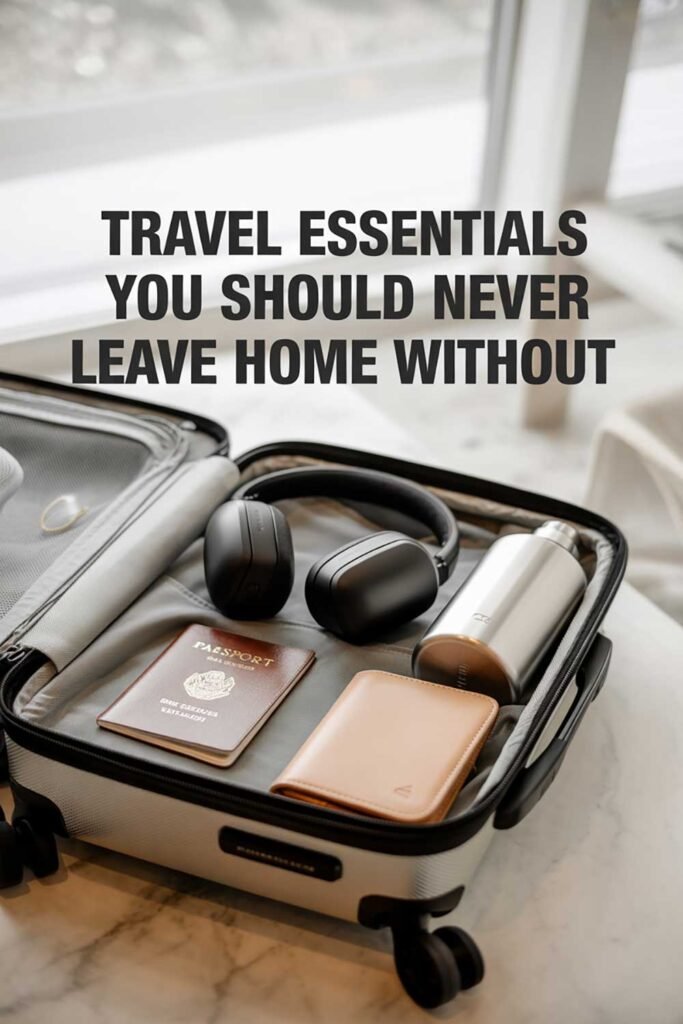
Keep all travel documents in one slim accessible wallet
The cruise’s document requirements span embarkation, every port of call, and disembarkation — each requiring the specific document at the specific moment that the document not at hand delays. Passport for embarkation and international ports. Cruise booking confirmation for the embarkation counter. Shore excursion booking references for the tender boat queue. Health documentation where required. Return flight confirmation for disembarkation day. All of these documents in one slim travel wallet at the carry-on’s outermost pocket produce the cruise’s every checkpoint as a smooth presentation rather than a bag search. Email digital backups of every document before boarding and save passport photographs offline on both adults’ phones.
Smart Packing: The Final Four Details
Check the cruise line’s specific dress code before packing
Dress code requirements vary significantly between cruise lines — and even between ships within the same cruise line’s fleet. A mainstream cruise line’s casual dress code is different from a premium line’s smart attire requirement, which is different again from a luxury line’s formal evening expectation. The specific cruise line’s current dress code policy — available on its website and in the booking confirmation — is the document that determines exactly what the clothing section of the suitcase needs to contain. Pack to the specific policy rather than to a general assumption about cruise dress codes. The policy confirmed before packing produces the correct wardrobe. The assumption produces the buffet dinner on elegant night.
Pack a dry bag specifically for port beach days
The port day beach excursion requires the dry bag that the ship’s pool deck session does not — a waterproof seal for the cruise card, the port day’s cash, the phone, and the return transport information at the beach where the bag is left on the shore while swimming. The beach at the tender port is the specific environment where the valuables left in an open bag are accessible to any passing opportunist and to any unexpected wave. A small roll-top dry bag inside the collapsible port day bag seals every critical item completely for the full duration of the beach session, regardless of how long the snorkel session runs or how close to the waterline the bag is left.
Leave 20% of bag capacity for what the ports inspire you to buy
Every port on a cruise itinerary produces the specific item that was not anticipated — the handmade jewelry from the market vendor, the local rum from the distillery tour, the art print from the gallery near the tender dock, the embroidered textile from the local artisan whose table was the specific unplanned highlight of the port morning. The suitcase packed to capacity at embarkation is the suitcase whose disembarkation morning produces the creative-packing session of the newly purchased items competing with the clothing for the available space. Pack at eighty percent capacity and include a lightweight foldable tote for the overflow. The ports will fill the remaining twenty percent. They always do.
Pack the suitcase the night before embarkation day — not the morning of
Embarkation day is the travel day that combines the flight or drive to the departure port with the boarding process, the cabin assignment, the muster drill, and the first sea day’s orientation — a schedule dense enough that the morning-of packing session under embarkation pressure consistently produces the item left at home, the power strip forgotten on the bedroom floor, and the seasickness tablets on the bathroom shelf. Pack the suitcase the evening before embarkation. Confirm every item against the checklist. Place the carry-on at the door. Embarkation morning is the confirmed suitcase and the gangway. The voyage begins from the gangway, not from the resolution of whatever the morning-of packing session forgot.
Book the Cruise Worth Packing All 25 Tips For
The cruise packing system is at its best at sea. Our travel agents book the cruise itineraries worth stepping onto the gangway fully prepared for. Let us find yours.
Book A TripThe cruiser who walked onto the gangway with the right wardrobe for every occasion, the magnetic hooks in the carry-on, and the seasickness tablets in the cabin bag had packed the evening before. The voyage had already begun. That is twenty-five tips. That is every cruise from here.
Picture Yourself on Elegant Night
The cocktail dress came out of the suitcase pressed and ready because you packed it on top the night before embarkation. The magnetic hooks on the cabin wall have the cardigans, the day bags, and the cruise card lanyard organized. The power strip is charging four devices from two outlets. The over-the-door organizer has every toiletry in its own pocket. The motion sickness tablets are in the nightstand drawer unused — because you took one before the first sea day as the instructions said. The maitre d’ at the main dining room smiles and leads you to your table. The sea is outside the porthole. The voyage is exactly what you packed it to be. That is the system. That is every first voyage that deserves to feel like the one you imagined.
One More Thing Before Embarkation Day
Print our free Travel Packing Checklist and use the cruise section to confirm formal wear is packed, the sweater is in the carry-on, the magnetic hooks and power strip are in the cabin bag, the seasickness tablets are accessible, and the suitcase is at the door the evening before you sail. The same checklist we confirm before every cruise we take.
Get the Free ChecklistExplore Our Top Picks for a Better Trip
Visit our favorites page for helpful booking ideas and travel essentials that we have found genuinely useful for cruise vacations and every other travel experience. Whether you are planning your first voyage or your next one, it is worth exploring.
See Our Top PicksLove Helping First-Time Cruisers Find Their Sea Legs?
Cruise bookings are some of the most rewarding travel agent work — the clients who come back voyage after voyage once they discover what cruising can be. If becoming a home-based travel agent who helps people find and book their best cruises sounds like the right next step, see how the TravelPreneur system works.
Become An AgentCruise Packing Printables at Premier Print Works
Visit Premier Print Works for cruise packing checklists, voyage planners, port day guides, travel journals, and printables that make every voyage a little more beautiful and a lot better prepared — from the evening the suitcase is packed to the morning the gangway is walked.
Visit Premier Print WorksDisclaimer
The information shared in this article is provided by Don and Diana’s Travels for general informational, educational, and inspirational purposes only. It reflects our personal experiences, opinions, and the experiences of travelers we have worked with. It is not professional medical, safety, or travel advice.
Cruise Line Policies
Dress codes, power strip policies, onboard regulations, port requirements, and all other cruise line policies vary by cruise line, ship, itinerary, and destination and are subject to change at any time. Always confirm current policies directly with your specific cruise line before travel. We are not responsible for any outcome arising from information in this article.
Health and Medical Information
Information about seasickness, motion sickness remedies, and other health-related content in this article is general educational information only and is not a substitute for professional medical advice. Always consult a healthcare provider before taking any medication, including over-the-counter remedies, particularly if you have existing health conditions or take other medications. Cruise ships have onboard medical facilities; seek professional care for any medical concern that requires it.
Sunscreen Regulations
Reef-safe sunscreen requirements vary by port destination and are subject to change. Always verify current requirements for the specific ports on your itinerary before travel.
Affiliate and Partner Links
This article may contain affiliate and partner links that pay us a commission. Our recommendations are based on real use and genuine belief in the products and services we share.
Composite Stories
Stories on this site combine real experiences from Don, Diana, clients, and travelers we have worked with. Details may be adjusted for privacy and narrative clarity.
No Guarantees
We do not guarantee any specific result from using the information in this article. Your results depend on your own choices, circumstances, and the specific policies of your cruise line.
Copyright and Use
All content is the copyrighted property of Don and Diana’s Travels. You may not copy or republish our content without prior written permission. You are welcome to share a direct link with proper credit.
By reading this article, you acknowledge that you have read and agree to this disclaimer.